.JPG "Exquisite Properties")
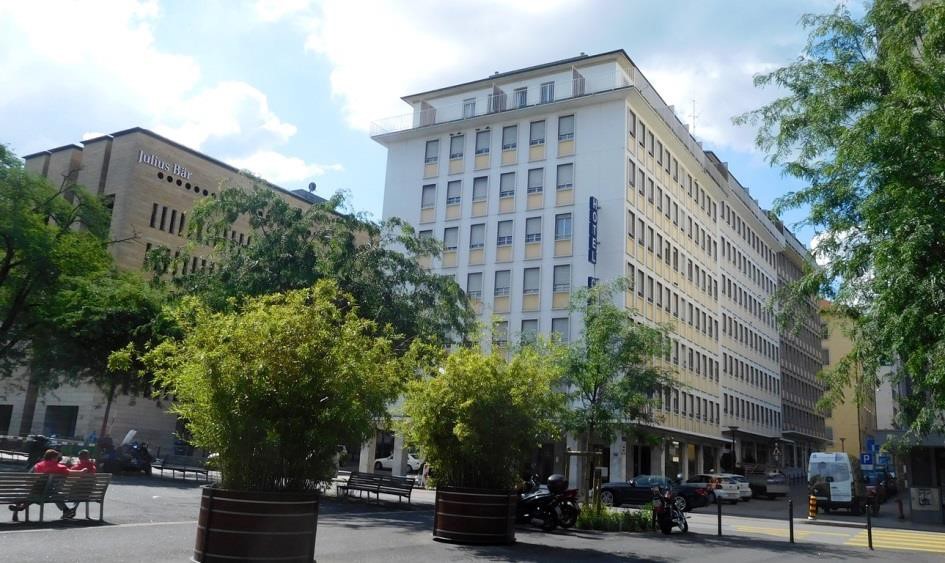
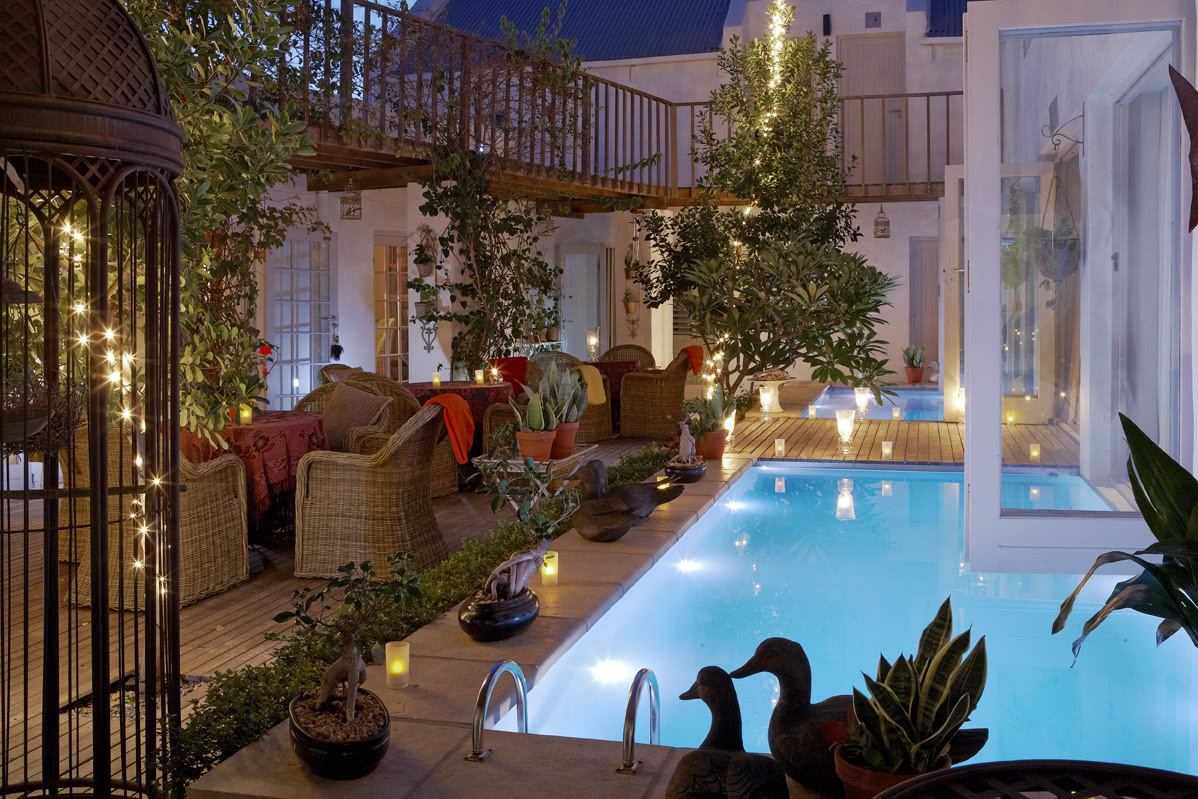
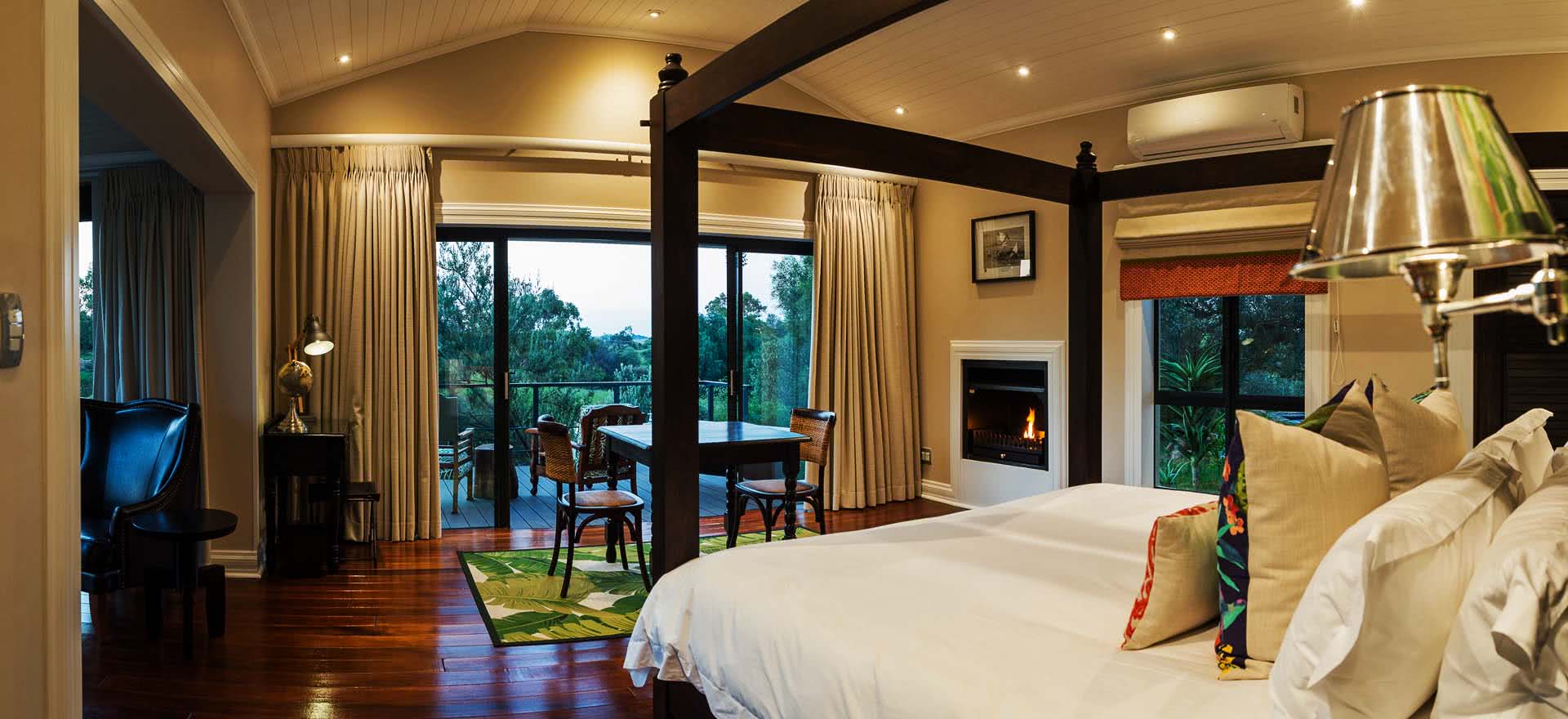
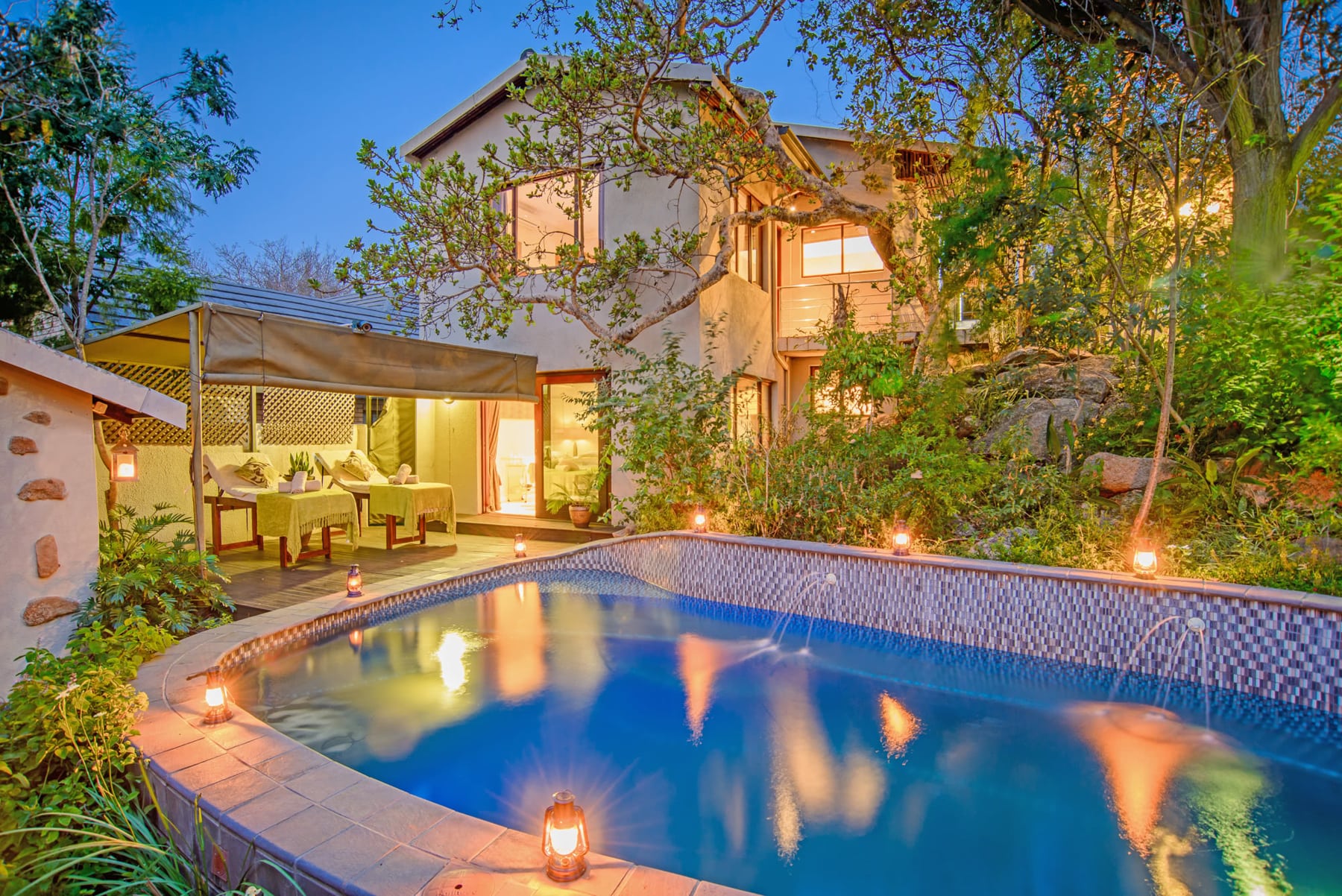
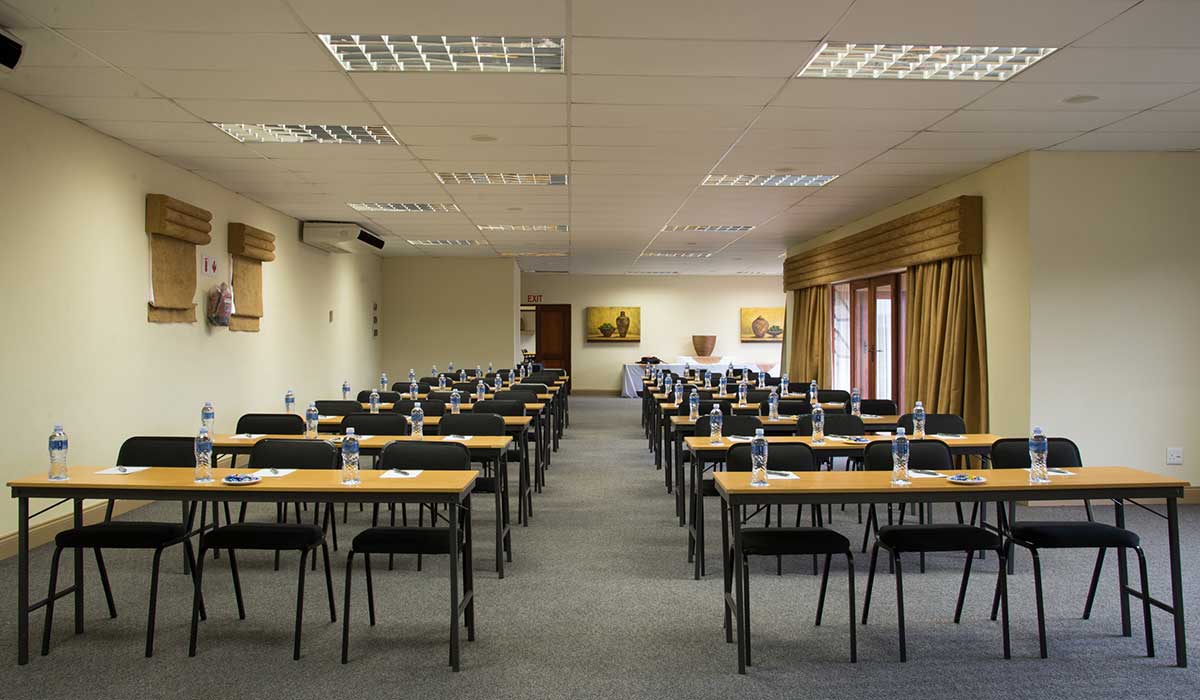
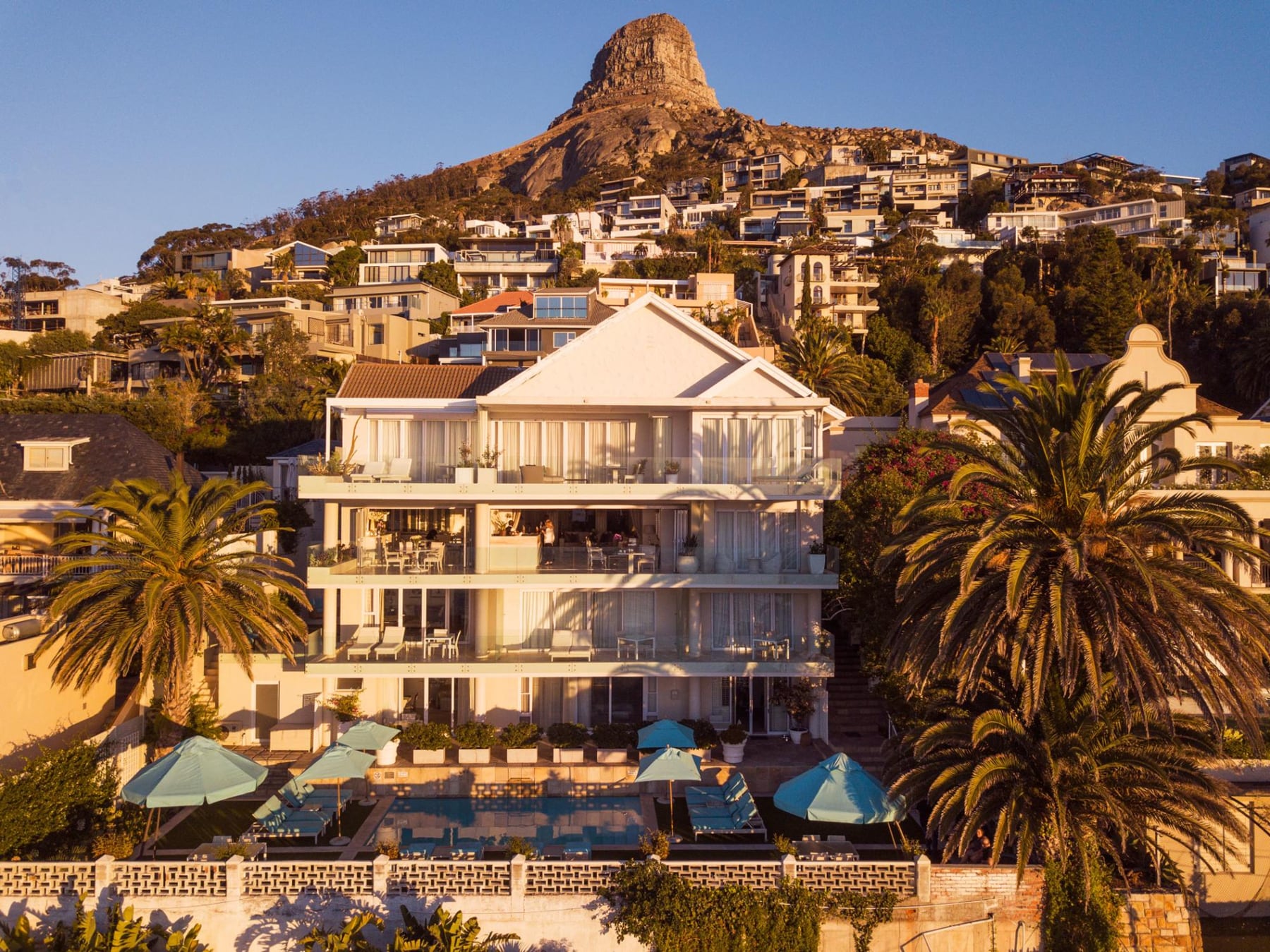
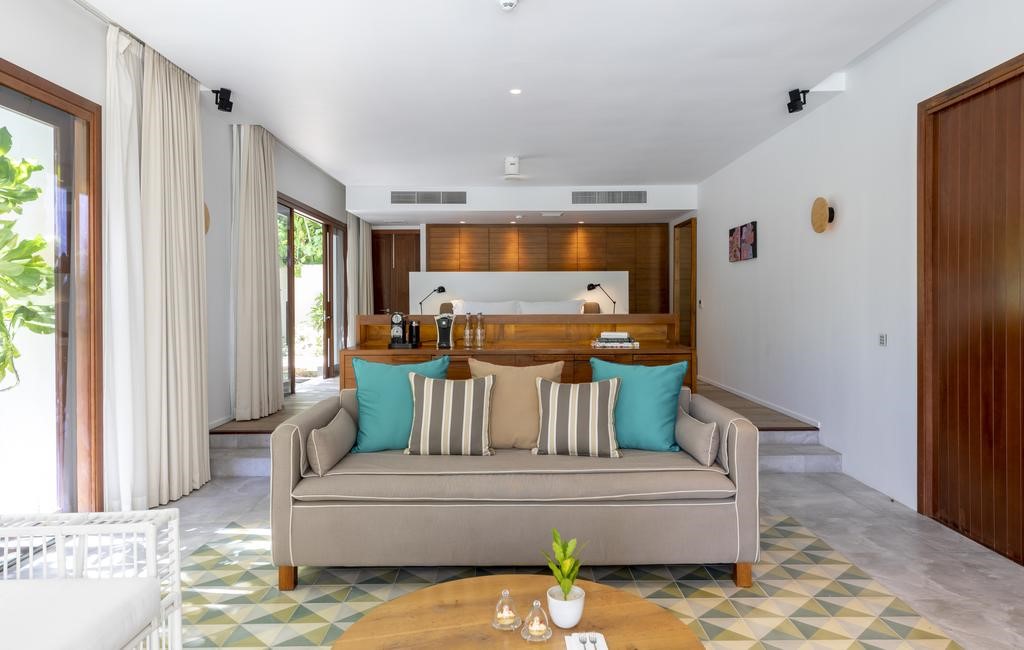
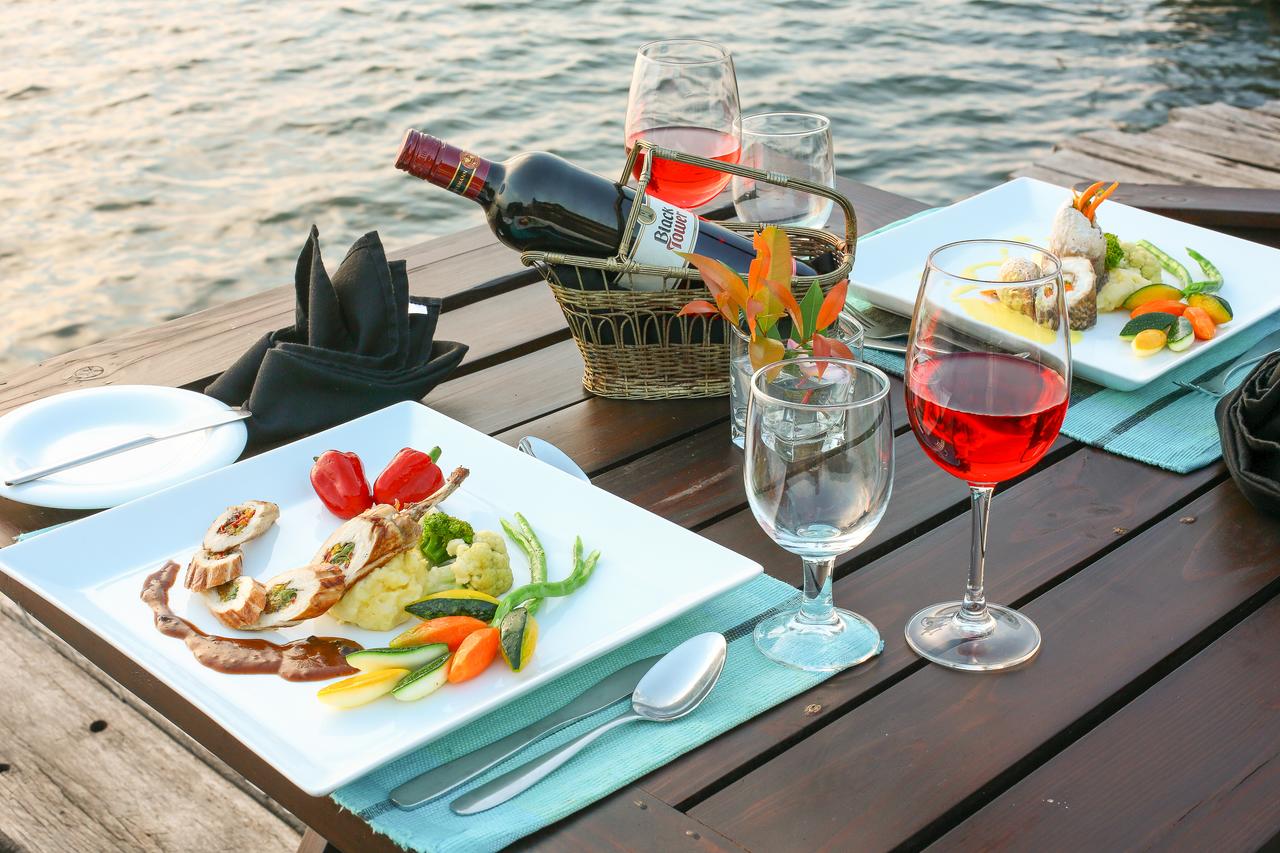
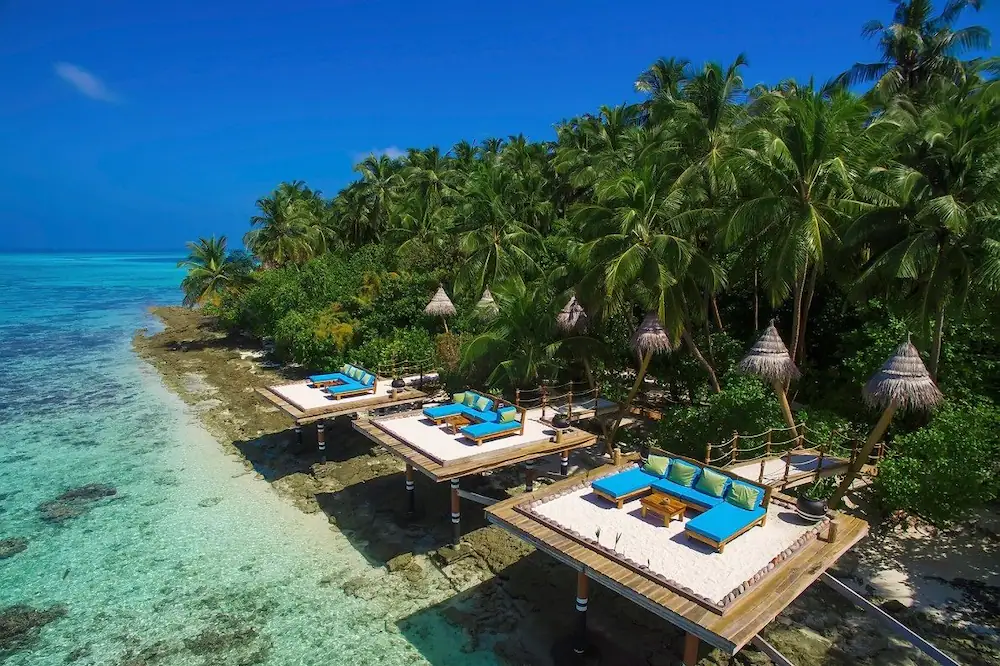
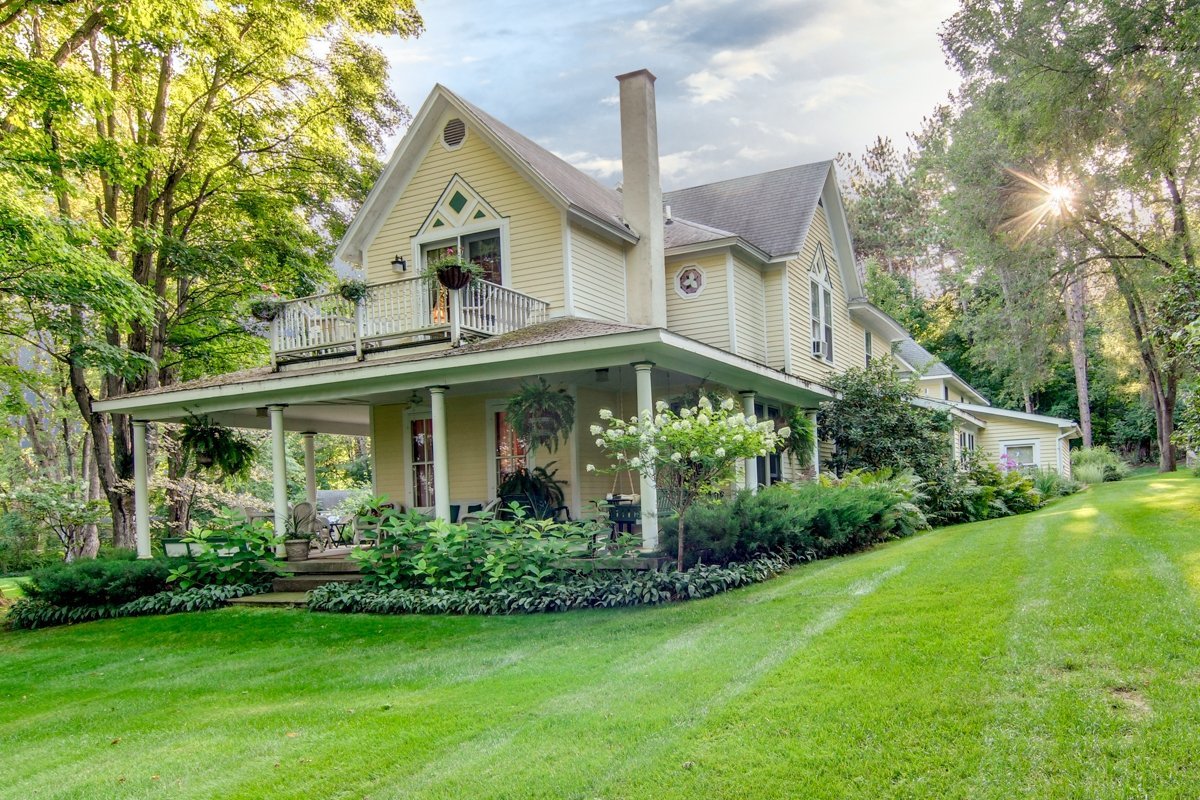
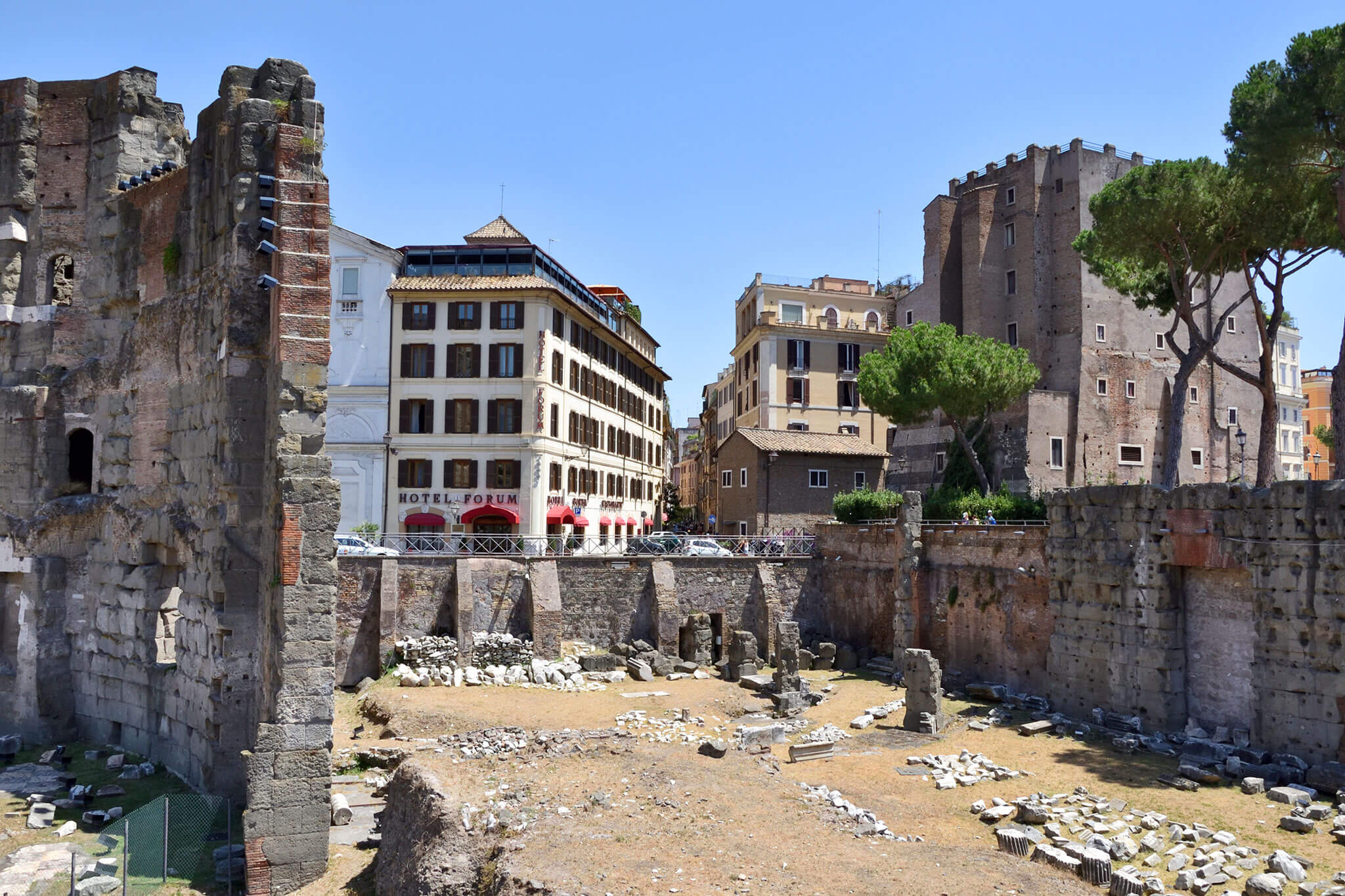
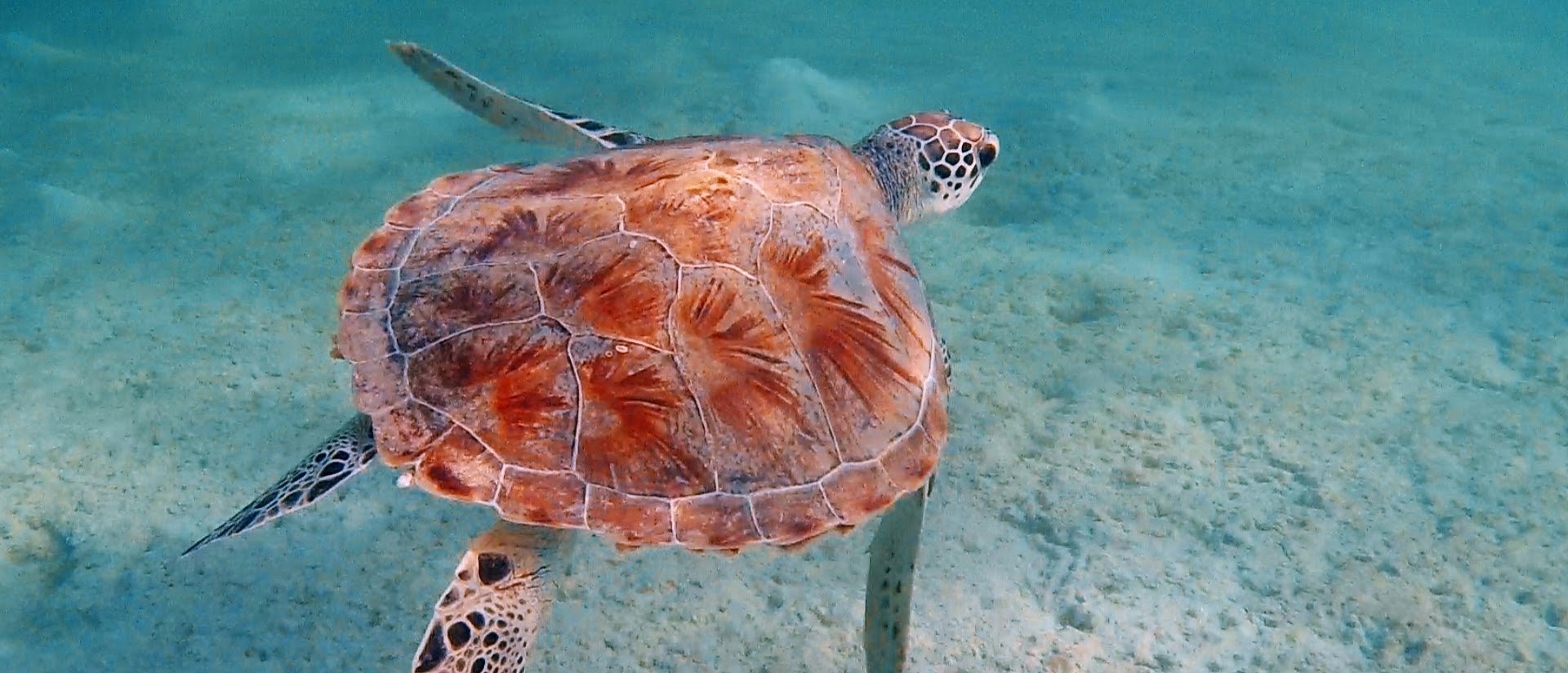

ASKING PRICE: R 900,000 EUROS
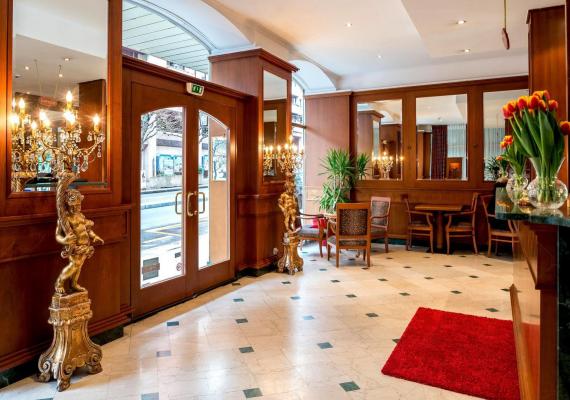
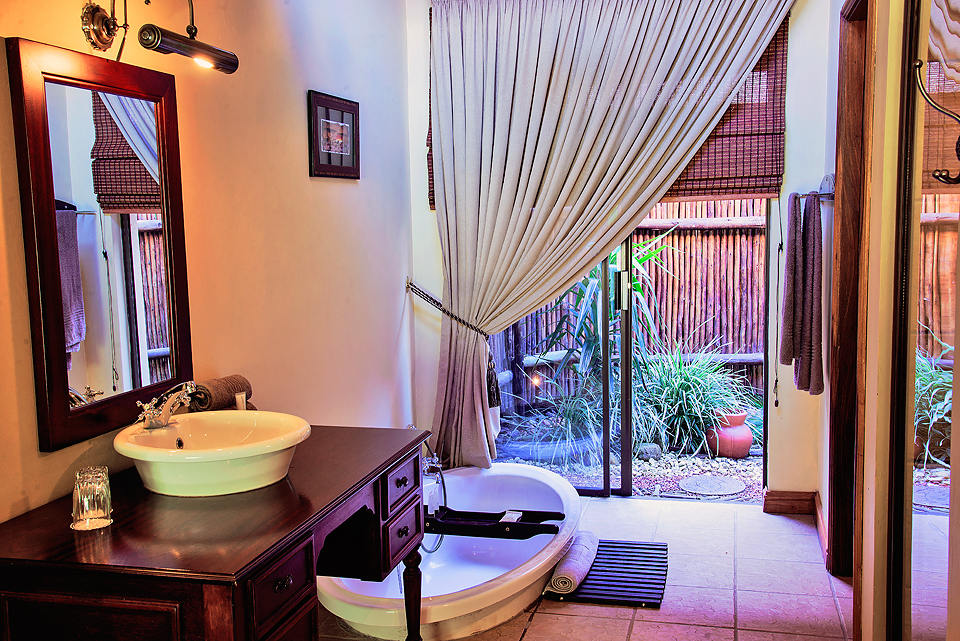
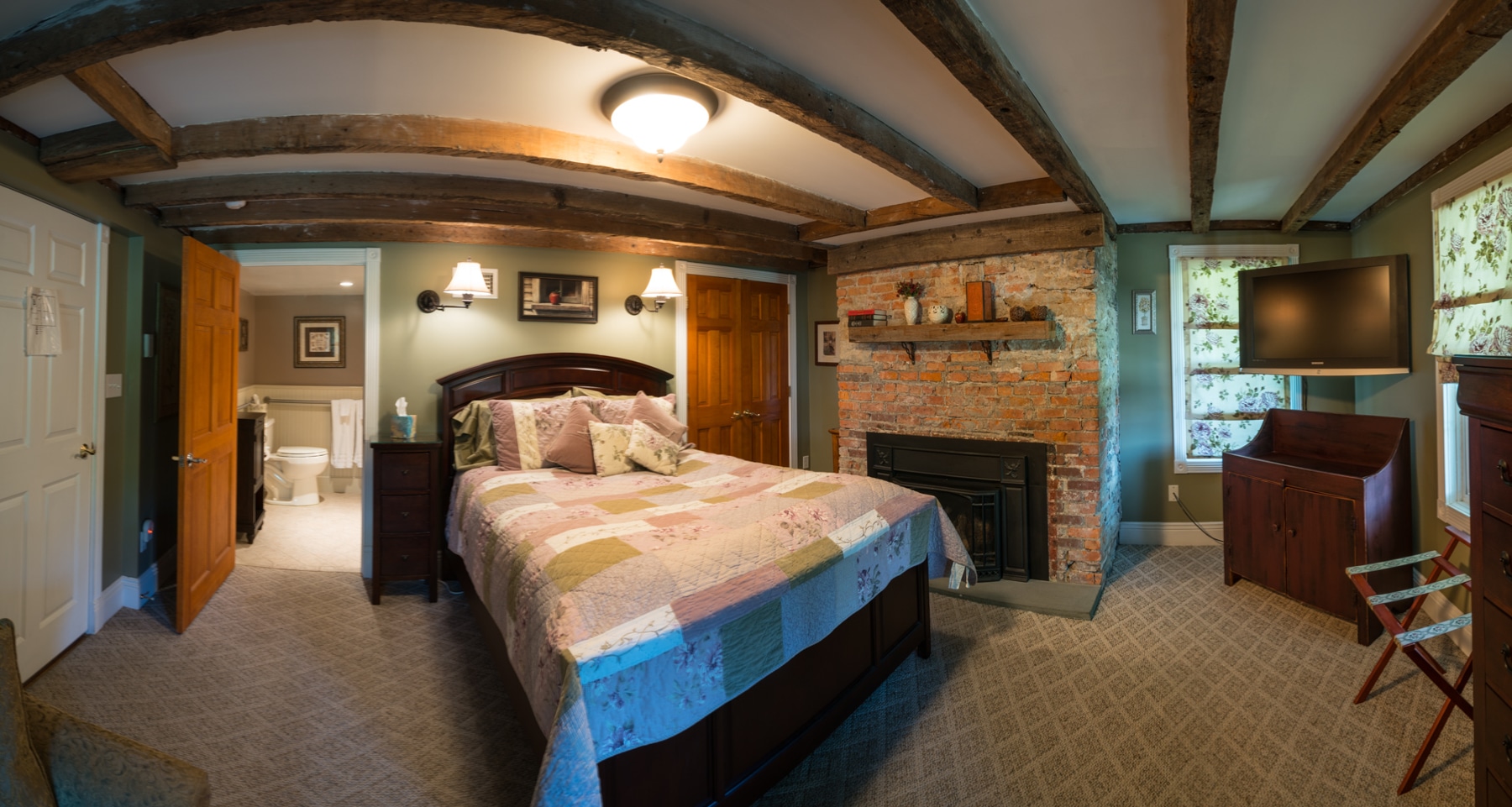
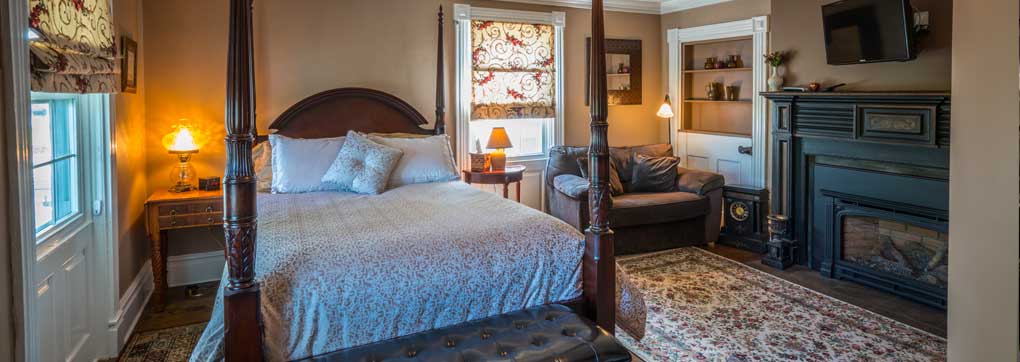
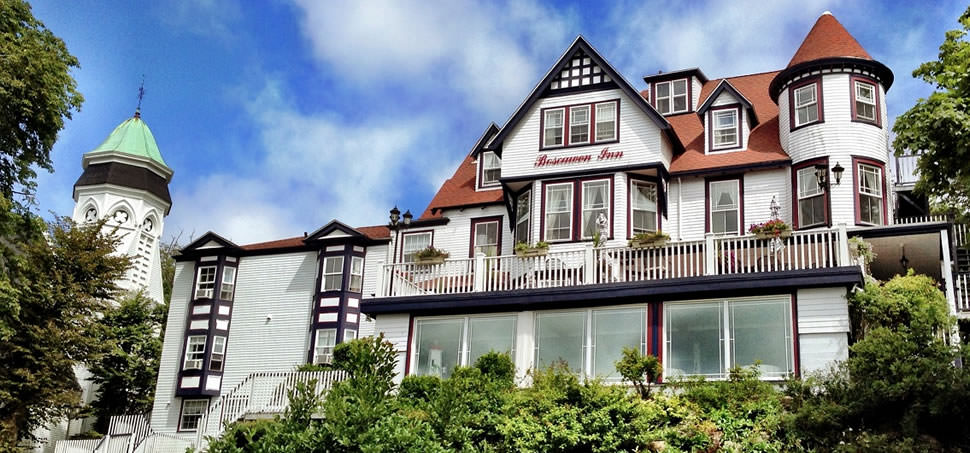
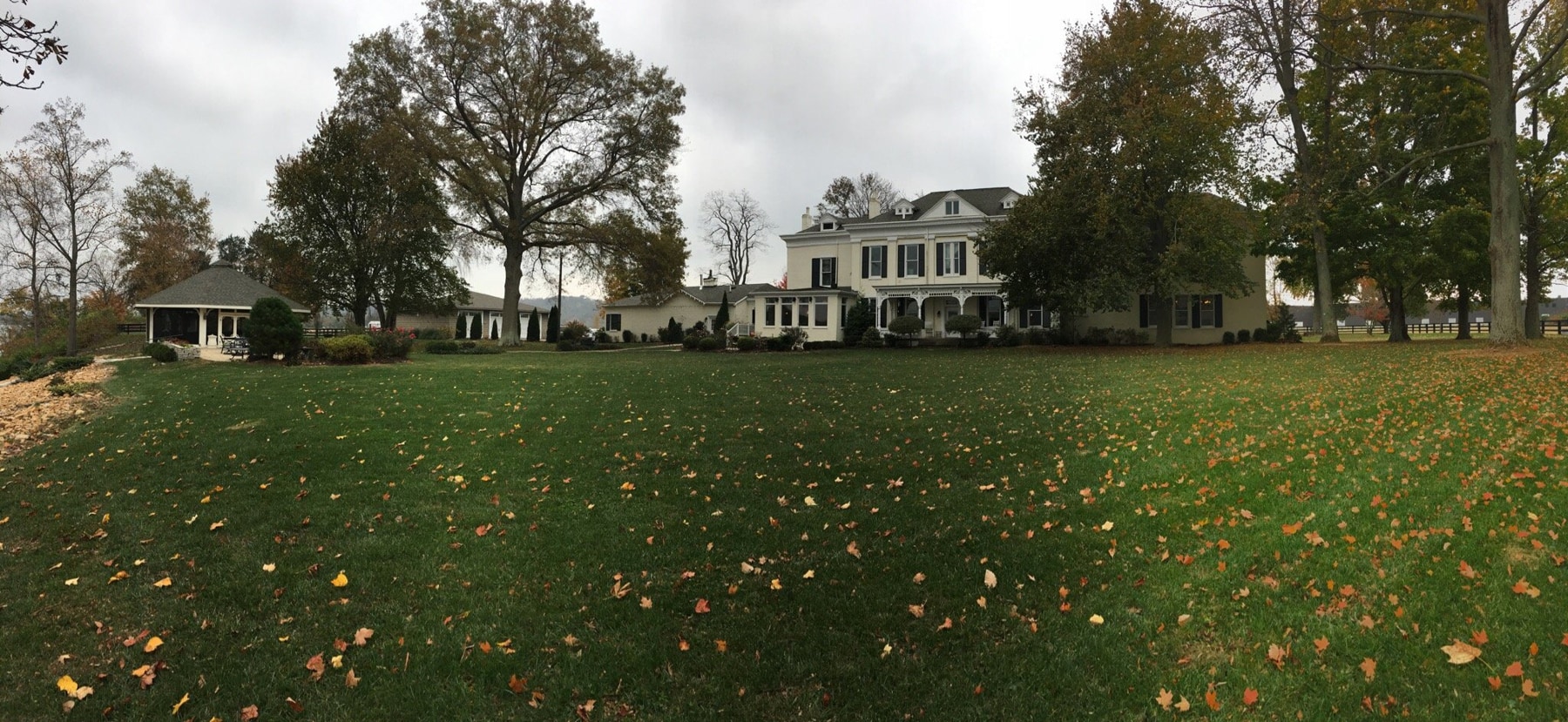
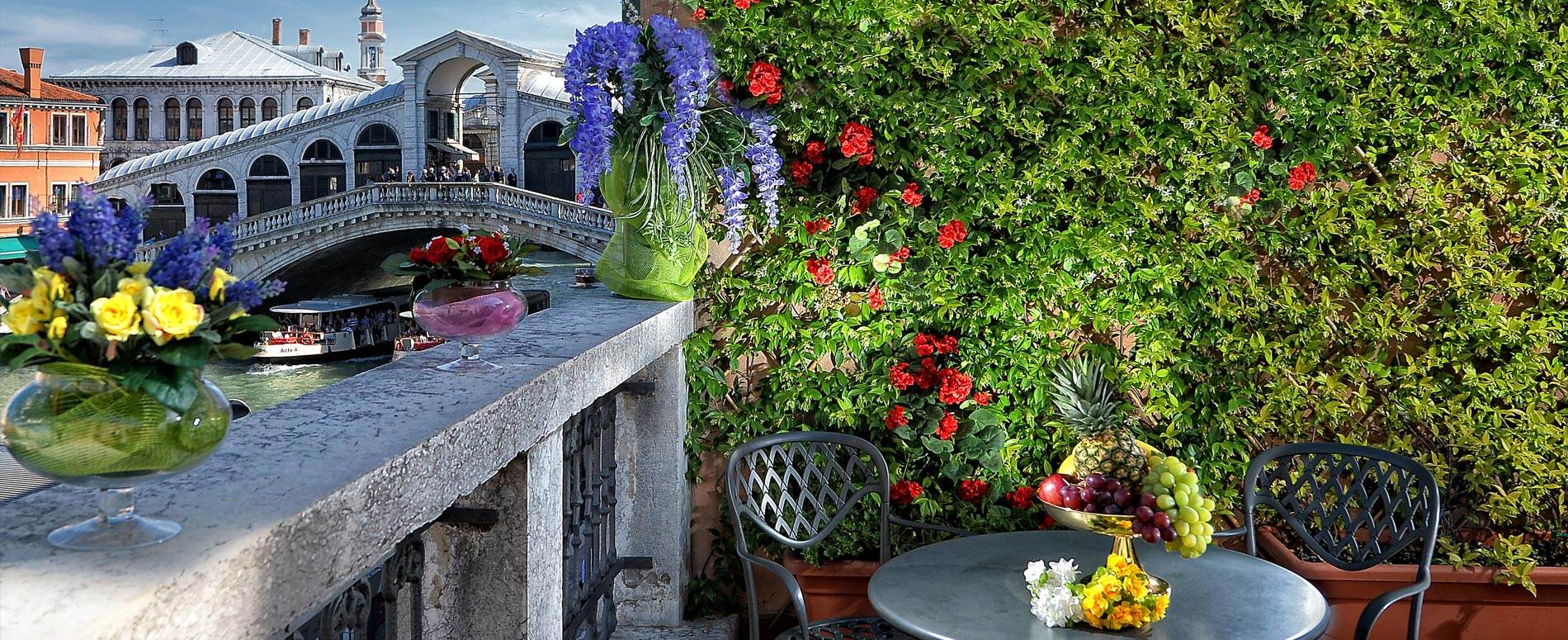
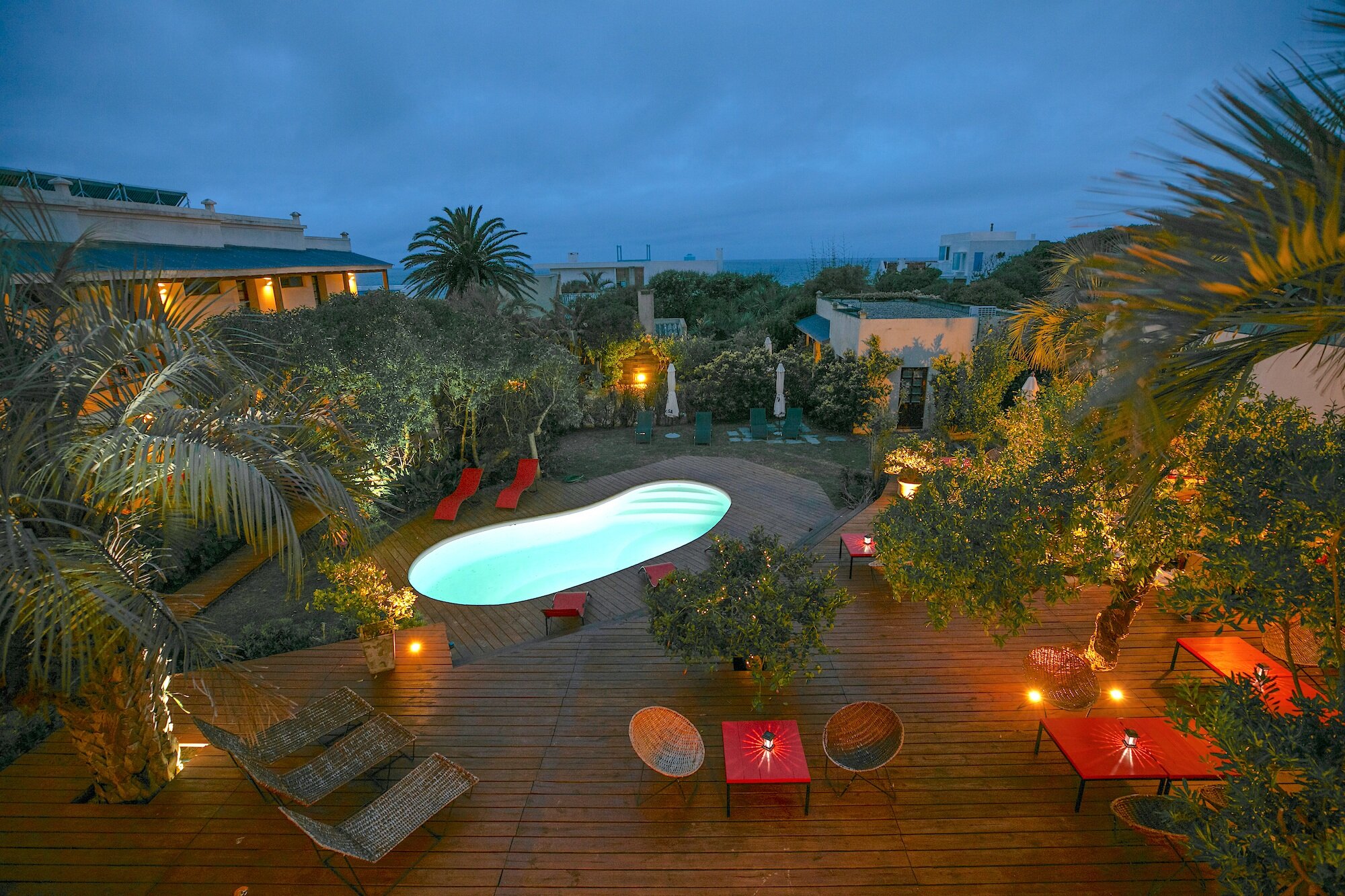
Our hotel has only 10 suite-style rooms, an independent bathroom and all the amenities to make your visit to our city a memorable experience. Find the best rates here, direct bookings help small businesses recover from the effects of the pandemic. Welcome home!
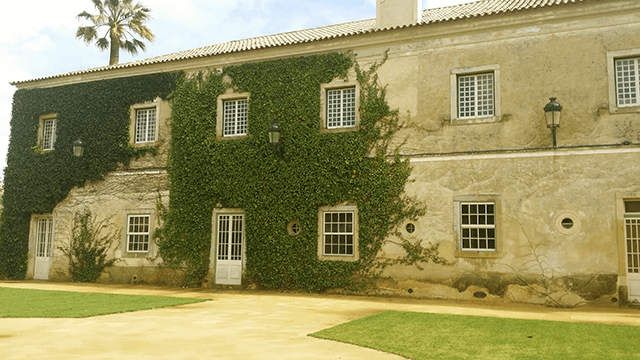
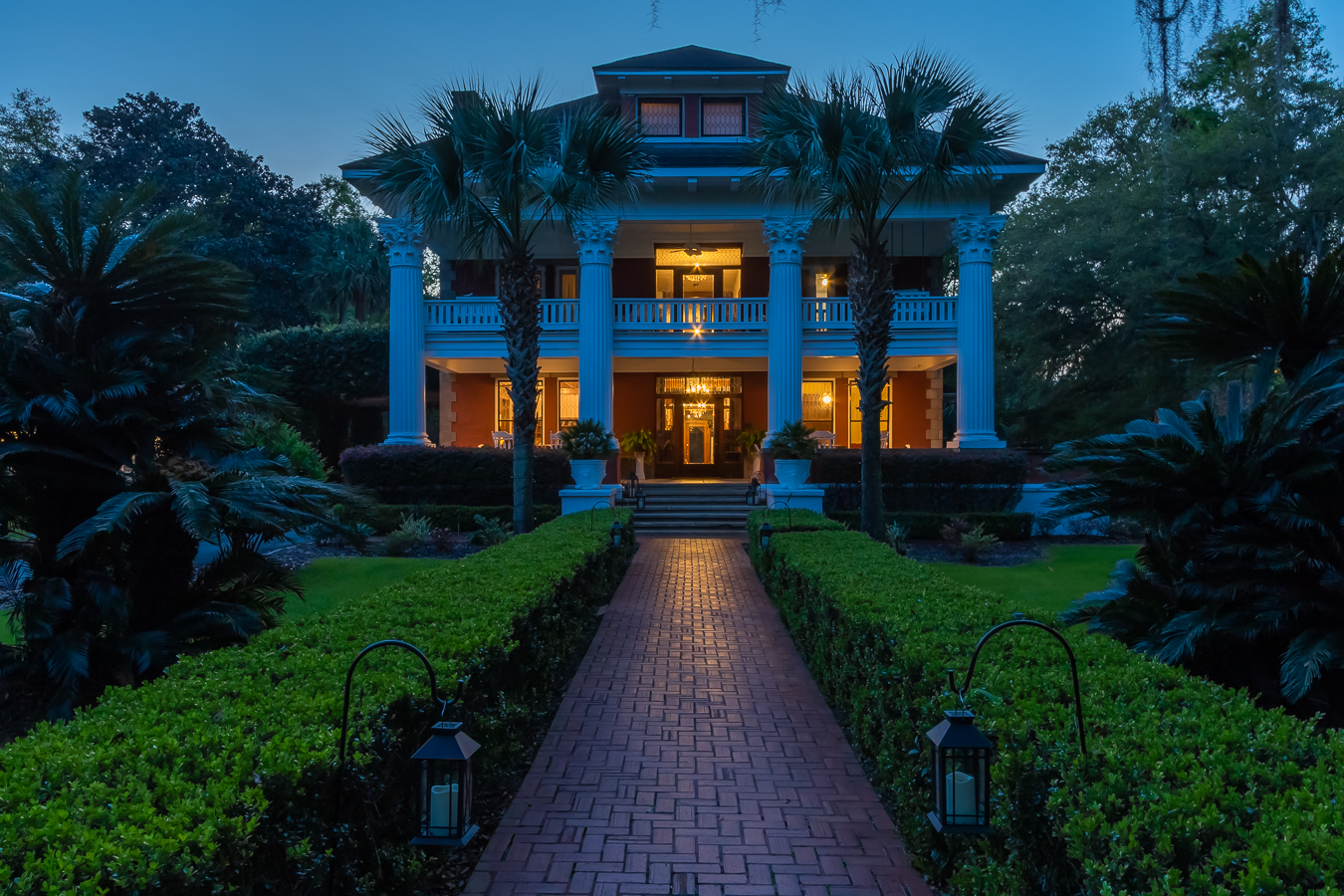
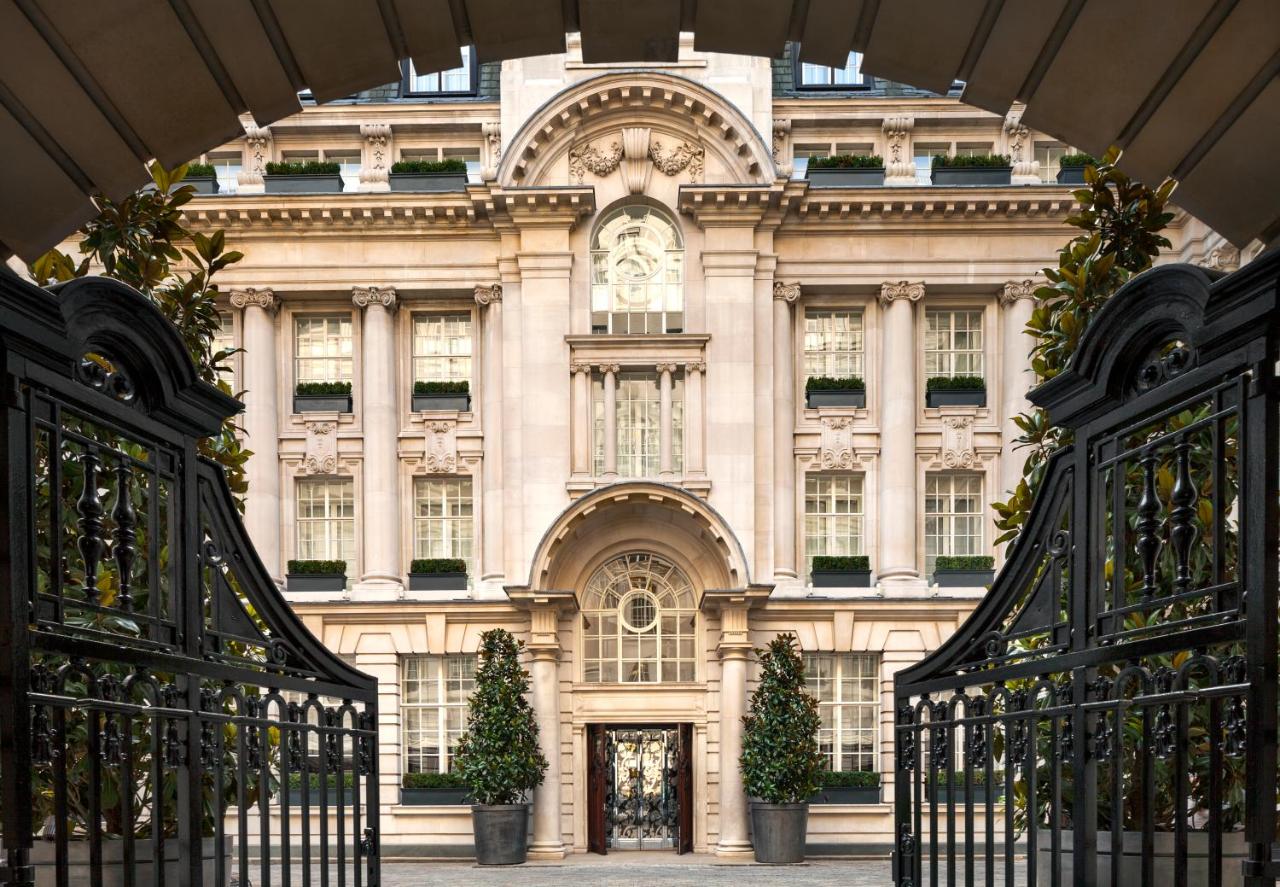
An architectural gem of the city has been reborn
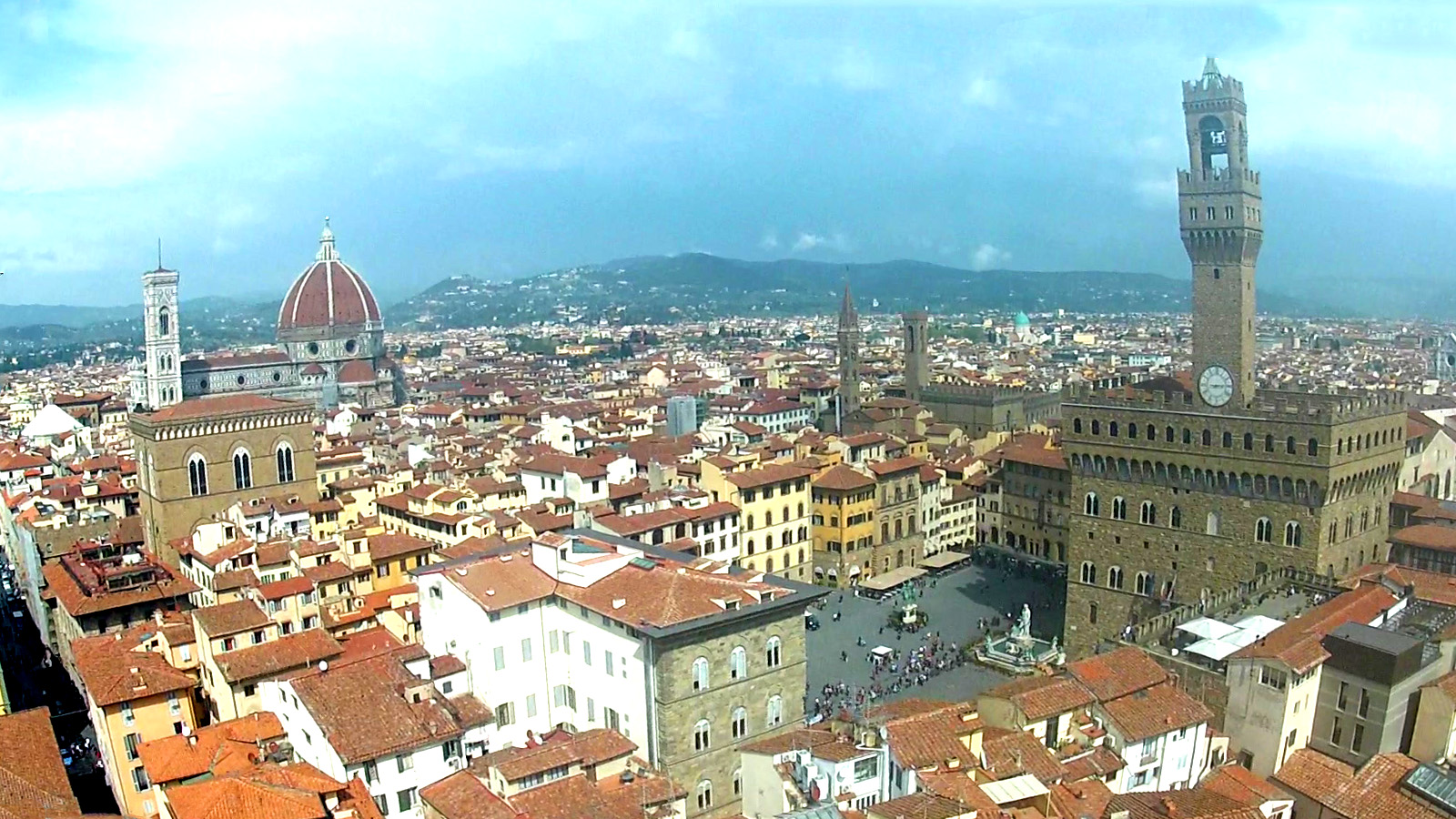
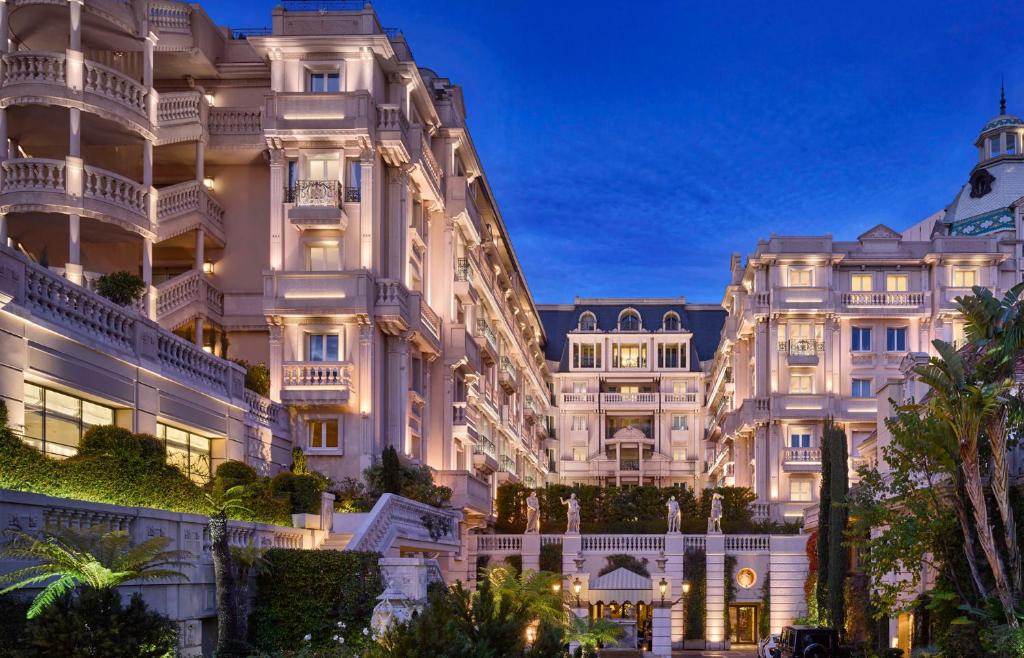
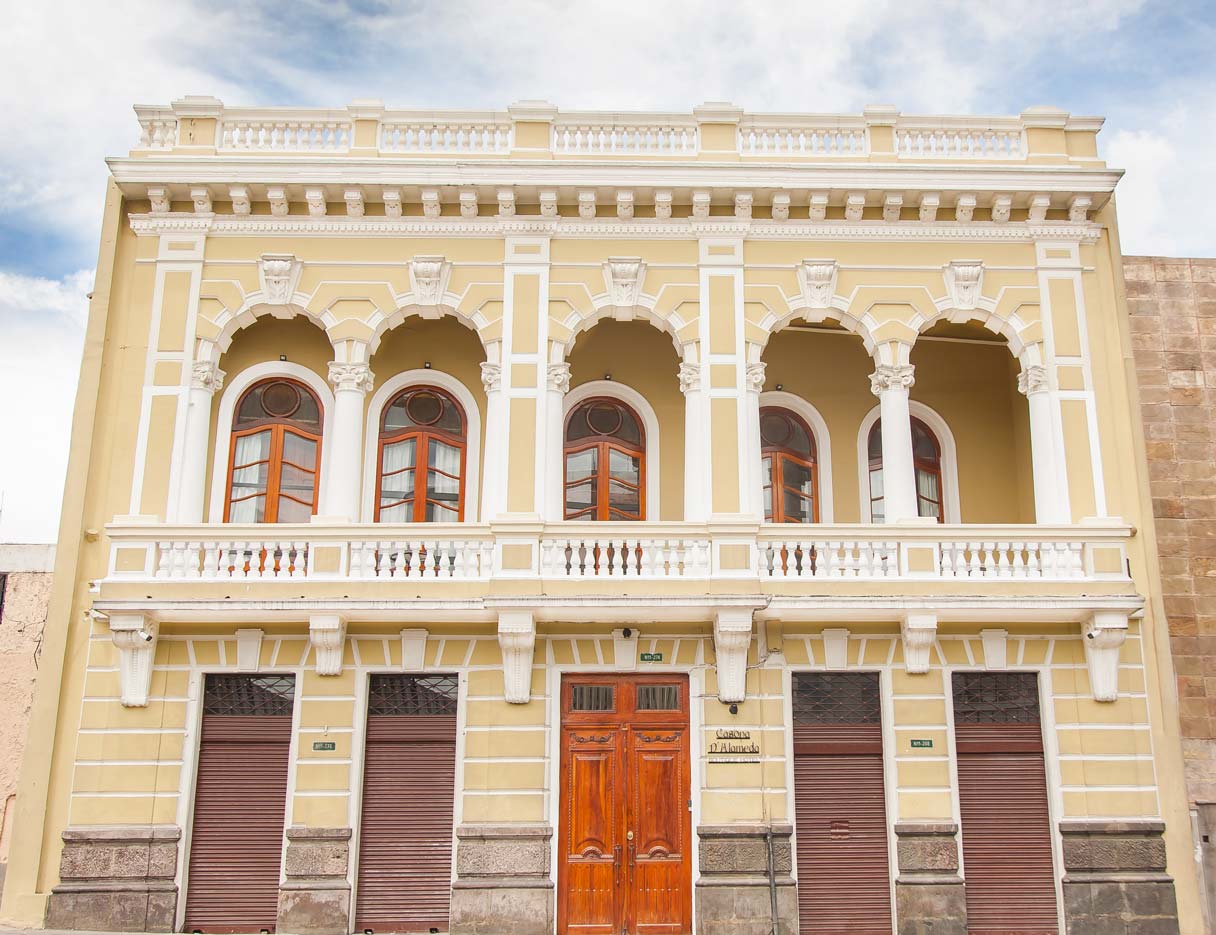
The early 1900s sparked the establishment of the La Alameda sector of Quito as a new and upcoming real estate development center for the upper class that wished to escape from the Historic Center of the city. The neoclassical mansion that would eventually become our Boutique Hotel was commissioned by Dr. Antonio Sáenz Marino to the Italian-Swiss architect: Francisco Durini Cáceres.
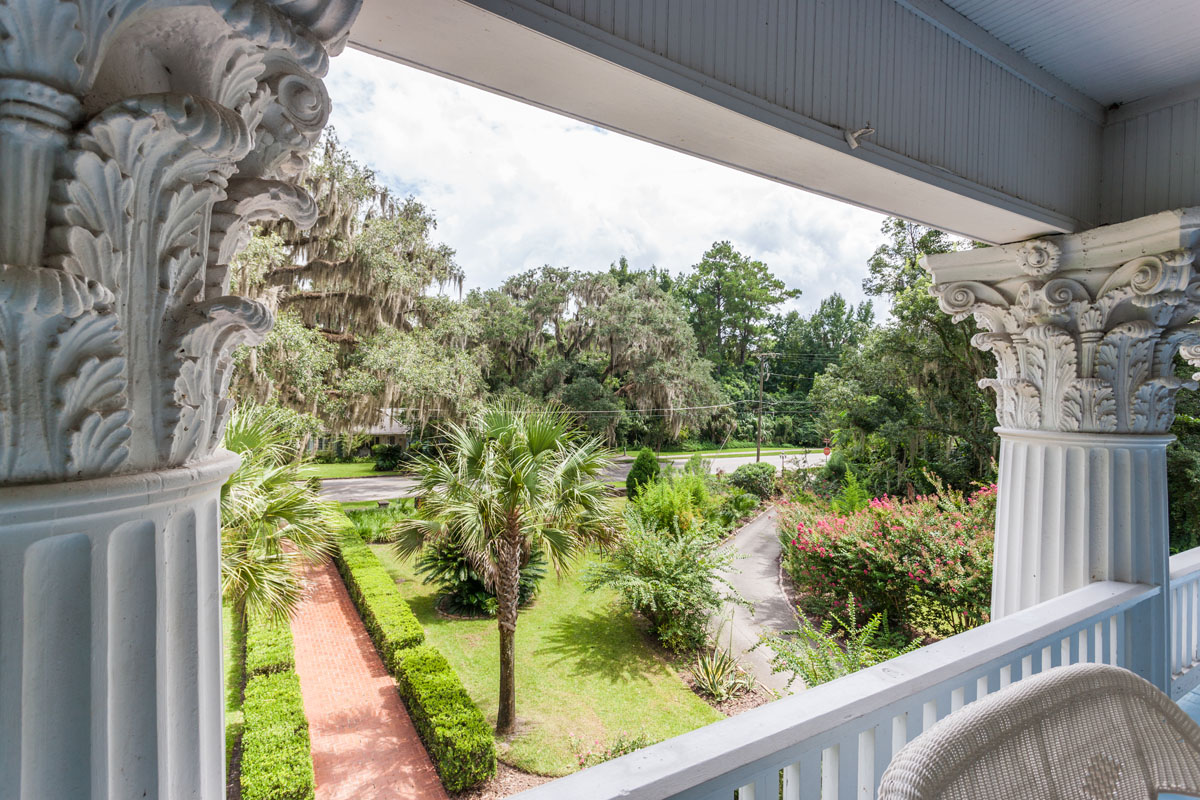
Durini’s design consisted of an ornate neoclassical two-story house with Italian design for the facades and the interior architectural details. The architect utilized the privileged location of the property, situated in front of the south entrance of La Alameda Park, to design one of the most essential aspects of the building: the lodge on the second floor. The lodge includes a covered balcony with numerous corbels and allows the interior rooms to open up towards the outside of the street.
The ground floor sits on a stone padded base around five large porticos. The central one, wider than the four lateral ones, serves as the entrance towards the interior of the building by means of a long corridor with a mosaic floor, while the others are entryways into commercial premises. The upper floor includes semi-circular arches that open up into the spacious main lodge, which is adorned with Corinthian columns and elaborate carpentry details. The arches end with a great cornice that supports an elegant balustrade, which surrounds the third-floor terrace.
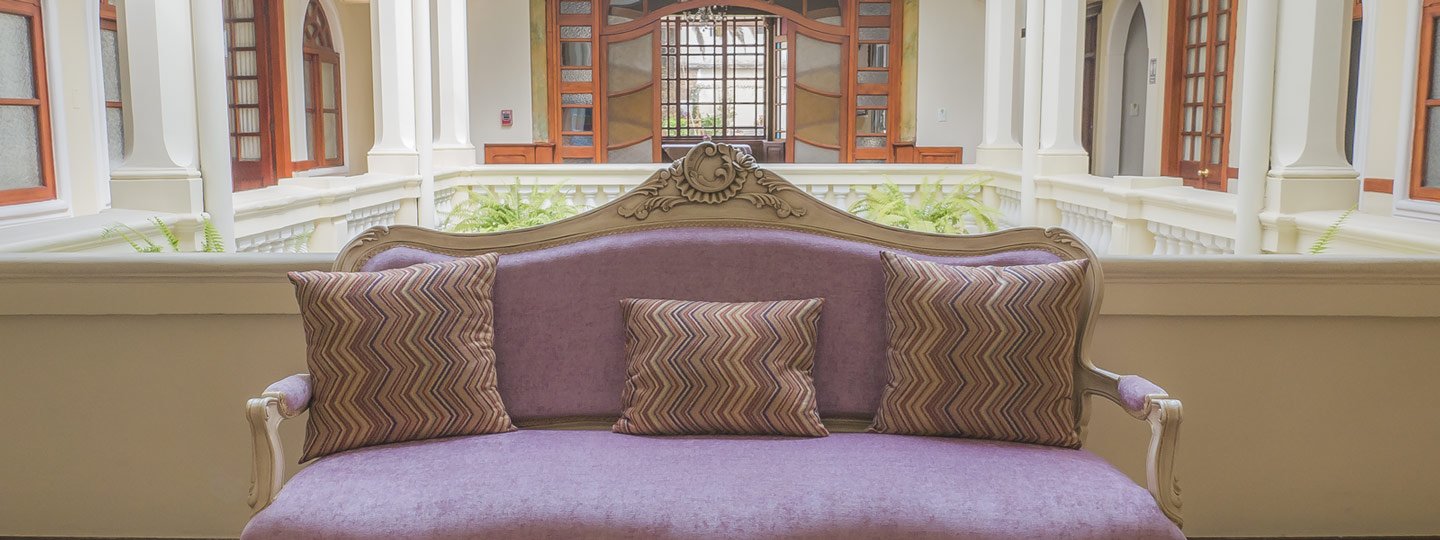
Inside the mansion, Durini maintained an Andalusian style with the rooms and halls surrounding the central courtyard, as was customary in the buildings of the Historic Center. The courtyard was originally covered by a metal and glass structure on the first floor, while the second level galleries were closed off by wooden and glass screens. Access to the second floor is provided by stairs located on each side of the hallways around the courtyard.
Due to the irregularity of the medians of the property, the lateral bays have an inclination that extends towards the interior, but in general, Durini tried to maintain the visual effect of rectitude and uniformity. Two symmetrical turrets on each side crown the front body of the mansion but face towards the patio so that they cannot be fully appreciated from the street. Through such towers, one can access the magnificent third-floor terrace.
The ascending inclination of the land, combined with the depth of the lot, allowed Durini to design the back garden at two distinct heights, one at a half elevation from the street level and another at the elevation of the second-floor galleries. Taking advantage of this unique characteristic, the architect engineered a rear façade. The so-called “Yellow Room” that has a glass bow window, opens up onto this patio facing the rear façade, flanked by two semicircular stairs that descend down towards the garden.
For the final touches, Dr. Antonio Saenz ordered decorations that reflected typical elements of that time period, yet commodities that would have been difficult to obtain for people of the middle and lower class. Such products include French brass painted ceilings, cement tiles, hardwood floors for the living rooms and bedrooms, and terrazzo floors for the stairs.
2018 Restoration
After many years in which the house was in the hands of politicians, military personnel, and businessmen, the house was put up for sale in 2009. The buyers were the Morán Baldeón family, who had been looking to acquire a heritage property to reside in that was located in the Historic Center to transform into a boutique Hotel in Old town Quito.
After a few years in Spain where his love for architecture was awakened, the owners managed to negotiate the purchase and acquirement of Dr. Sáenz Merino’s neoclassical mansion in 2015. The bureaucratic processes of approval for their plans took about two years, and the following restoration which sought to recover the original details of the house took an additional year.
During the restoration of this boutique hotel in old town Quito some items were found that attracted the attention of the owners, including animal bones and a pair of shoes with the soles completely worn. The shoes led the family to wonder what the living conditions were like for those people who inhabited the property before they had acquired it.
There were additionally two truly surprising findings, the first being a piece of paper that contained the data of an inmate at “Police Station No. 1”, which led to the discovery of a forgotten period in which the house served as a police headquarters. In those days, the mansion sporadically housed some minor prisoners for a short period of time. Today, that space is used as a room to store wines.
The second finding was sketches of the arches of the lodge and the facade, and details of the city made with waxed pencil, located on the wall of what used to be one of the ballrooms, today converted into the Amazon Suite. The drawings’ purpose was almost certainly so that the workers in charge of building and beautifying these arches could do it properly because, after a comparison of the calligraphic features in some of the numbers, it was determined that the sketches were made by Francisco Durini Cáceres himself. These details portray for the first time a style of the architect that until today, was unknown.
The furniture for the different areas of the hotel is in the style of Louis XV, inspired by the furnishing that the Morán Baldeó family used to have in their home, but in a more modern design. The furniture was manufactured by skilled craftsmen from San Antonio de Ibarra, known for their technique learned in the esteemed Quito school.
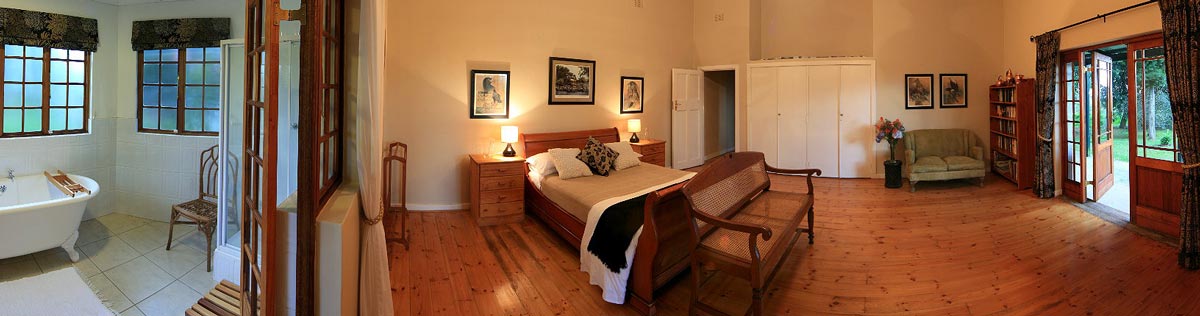
This family tourism project opened in May 2019, offering nine elegantly decorated, exclusive suites, each inspired by a major tourist attraction in Ecuador. We offer rooms such as the Galapagos Suite, the Amazon Suite, the Chocolate Suite, the Orchid Suite, the Roses Suite, the Cotopaxi Suite, the Montecristi Suite, the Otavalo Suite, and the Mitad del Mundo Suite. The hotel contains an exquisite back garden and magnificent terraces for solace and rest, as well as a roofed central courtyard that is the perfect place for meals and relaxing, or events such as weddings and parties.
Rooms
Luxury Rooms Amazonas and Galapagos
Bed: 1 double king size bed
Occupancy: 2 adult
Location: 1st floor
Size: Approximately 30 m²
Bathroom: Shower bath and bathtub
Room Amenities
Double Rooms Montecristi and Cotopaxi
Bed: 1 double king Queen bed
Occupancy: 2 adult
Location: 2nd floor
Size: Approximately 25 m²
Bathroom: Shower bath
Room Amenities
Bed: 1 double king-size bed or 2 single beds
Occupancy: 2 adult
Location: 1st floor
Size: Approximately 30 m²
Bathroom: Shower bath
Room Amenities
My Boutique Wedding
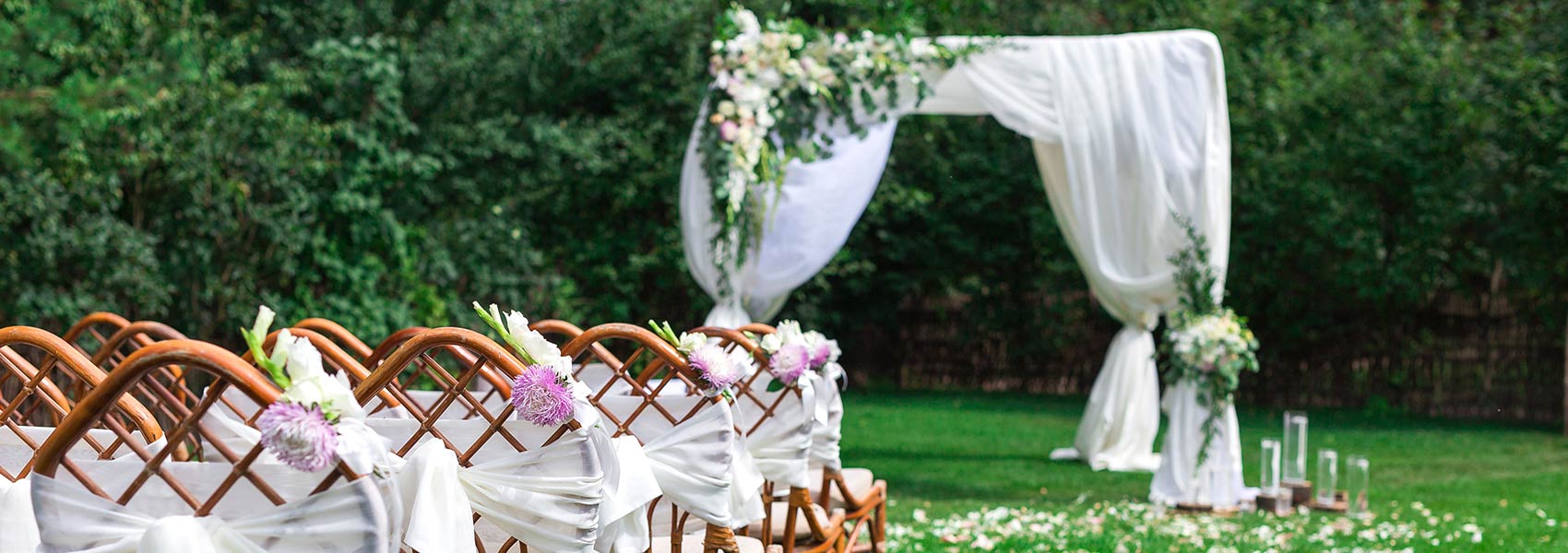
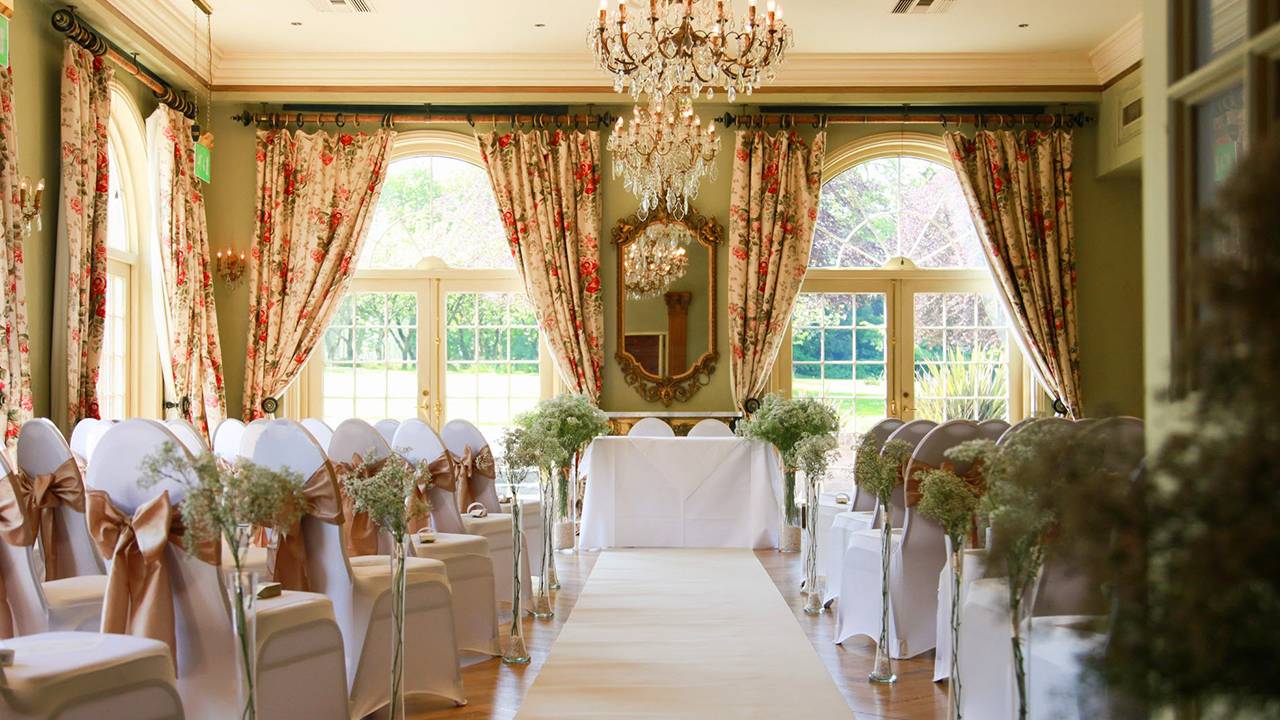
At our Boutique Hotel, we offer you an unforgettable experience so that your Boutique Wedding is perfect!, Together with the best professionals in the Wedding sector, we will accompany you throughout the process, we invite you to know our spaces surrounded by history, elegance and exclusivity.
Quito
Quito is the capital of Ecuador and at an elevation of 2,850 m (9,350 ft) above sea level, it is the second-highest official capital city in the world, and the closest to the equator. It is located in the Guayllabamba river basin, on the eastern slopes of Pichincha, an active stratovolcano in the Andes Mountains.
In 2008, the city was designated as the headquarters of the Union of South American Nations.
The historic center of Quito is one of the largest, least-altered and best-preserved in the Americas. Quito and Kraków, Poland, were the first World Cultural Heritage Sites declared by UNESCO, in 1978. The central square of Quito is located about 25 km (16 mi) south of the equator; the city itself extends to within about 1 km (0.62 mi) of zero latitude. A monument and museum marking the general location of the equator is known locally as la mitad del mundo (the middle of the world), to avoid confusion, as the word Ecuador is Spanish for equator.
History
Pre-Columbian period
The oldest traces of human presence in Quito were excavated by American archeologist Robert E. Bell in 1960, on the slopes of the Ilaló volcano, located between the eastern valleys of Los Chillos and Tumbaco. Hunter-gatherers left tools of obsidian glass, dated to 8000 BC. This archeological site, called EI Inga, was brought to Robert Bell's attention by Allen Graffham. While employed as a geologist in Ecuador, Graffham pursued his amateur interest in archeology. He made surface collections at the site during 1956. The discovery of projectile points, particularly specimens with basal fluting, stimulated his interest, and he made several visits to the site to collect surface materials. Graffham's previous interest in Paleo-Indian remains, and his experience with early man materials in Kansas and Nebraska in the Central Plains of the United States, led him to believe that the site was an important discovery.
The second important vestige of human settlement was found in the current neighborhood of Cotocollao (1500 BC), northwest of Quito. The prehistoric village covered over 26 hectares in an area irrigated by many creeks. Near the ancient rectangular houses, there are burials with pottery and stone offerings. The Cotocollao people extracted and exported obsidian to the coastal region.
Early colonial priests and historians wrote about the Quitu people and a Kingdom of Quito. Their accounts said that another people, known as the Cara or the Schyris, came from the coast and took over the region by AD 890. On what is sometimes called the Cara-Quitu kingdom, they ruled until the Inca took over the territory in the 15th century. Quitu descendants survived in the city even after the Spanish conquest.
But by the 20th century, some prominent historians who began more academic studies, doubted accounts of the Quitu-Cara kingdom. Little archeological evidence had been found of any monuments or artifacts from it. They began to think it was a legendary pre-Hispanic account of the highlands.
In the early 21st century, there were spectacular new finds of 20-metre deep tombs in the Florida neighborhood of Quito. Dating to AD 800 they provide evidence of the high quality of craftsmanship among the Quitu, and of the elaborate and complex character of their funerary rites. In 2010 the Museum of Florida opened to preserve some of the artifacts from the tombs and explain this complex culture.
Colonial period
Inca indigenous resistance to Spanish colonization continued during 1534. The conquistador Diego de Almagro founding Santiago de Quito (in present-day Colta, near Riobamba) on 15 August 1534, renamed as San Francisco de Quito on 28 August 1534. The city was later refounded at its present location on 6 December 1534 by 204 settlers led by Sebastián de Benalcázar, who captured leader Rumiñahui, effectively ending all organized resistance.[10] Rumiñahui was executed on January 10, 1535.
On 28 March 1541 Quito was declared a city, and on 23 February 1556 it was given the title Muy Noble y Muy Leal Ciudad de San Francisco de Quito ("Very Noble and Loyal City of San Francisco of Quito"), marking the start of its next phase of urban development. In 1563 Quito became the seat of a Real Audiencia (administrative district) of Spain. It was classified as part of the Viceroyalty of Peru until 1717, after which the Audiencia was part of the new Viceroyalty of Nueva Granada. Under both Viceroyalties, the district was administered from Quito, (see Real Audiencia de Quito).
The Spanish established Roman Catholicism in Quito. The first church (El Belén) was built before the city was officially founded. In January 1535 the San Francisco Convent was constructed, the first of about 20 churches and convents built during the colonial period. The Spanish converted the indigenous population to Christianity and used them as labor for construction.
In 1743, after nearly 210 years of Spanish colonization, Quito was a city of about 10,000 inhabitants.[citation needed] Quito briefly proclaimed its de facto independence from Spain between 1765 and 1766 during the Quito Revolt. On 10 August 1809, a movement was again started in Quito to win independence from Spain. On that date, a plan for government was unveiled, which appointed Juan Pío Montúfar as president and prominent pro-independence figures in other government positions.
This initial movement was defeated on 2 August 1810, when colonial troops arrived from Lima, Peru, and killed the leaders of the uprising and about 200 other settlers. A chain of conflicts climaxed on 24 May 1822, when Antonio José de Sucre, under the command of Simón Bolívar, led troops into the Battle of Pichincha, on the slopes of the volcano. Their victory established the independence of Quito and the surrounding areas.
Republican Ecuador
In 1833 members of the Society of Free Inhabitants of Quito were assassinated by the government after they conspired against it. On 6 March 1845 the Marcist Revolution began. In 1875 the country's president, Gabriel García Moreno, was assassinated in Quito. Two years later, in 1877, Archbishop José Ignacio Checa y Barba was killed by poison while celebrating Mass in Quito.
In 1882 insurgents rose up against the regime of dictator Ignacio de Veintimilla. However, this did not end the violence that was occurring throughout the country. On 9 July 1883 the liberal commander Eloy Alfaro participated in the Battle of Guayaquil, and after further conflict, he became the president of Ecuador on 4 September 1895. Upon completing his second term in 1911, he moved to Europe. He returned to Ecuador in 1912 and attempted to return to power unsuccessfully; he was arrested on 28 January 1912, and imprisoned, then lynched by a mob that stormed the prison. His body was dragged through the streets of Quito to a city park, where it was burned.
In 1932 the Four Days' War broke out. This was a civil war that followed the election of Neptalí Bonifaz and the subsequent realization that he carried a Peruvian passport. On 12 February 1949, a realistic broadcast of H. G. Wells' novel The War of the Worlds led to citywide panic, and the deaths of more than twenty people who died in fires set by mobs.
21st century
In 2011 the city's population was 2,239,191 people. Since 2002 the city has been renewing its historical center. The old airport, built on filling in a lagoon, was closed to air traffic on 19 February 2013. The area was redeveloped as the "Parque Bicentenario" (Bicentenary Park). The new Mariscal Sucre International Airport, 45 minutes from central Quito, opened to air traffic on 20 February 2013.
During 2003 and 2004, the bus lines of the Metrobus (Ecovia) were constructed, traversing the city from the north to the south. Many avenues and roads were extended and enlarged, depressed passages were constructed, and roads were restructured geometrically to increase the flow of traffic. A new subway system is under construction.
Geography
Quito is located in the northern highlands of Ecuador in the Guayllabamba river basin. The city is built on a long plateau lying on the east flanks of the Pichincha volcano. The valley of Guayllabamba River where Quito lies is flanked by volcanoes, some of them snow-capped, and visible from the city on a clear day. Quito is the closest capital city to the equator. Quito's altitude is listed at 2,820 m (9,250 ft).
Nearby volcanoes
Quito's closest volcano is Pichincha, looming over the western side of the city. Quito is the only capital city that was developed so close to an active volcano. Pichincha volcano has several summits, among them Ruku Pichincha at 4,700 m (15,400 ft) above sea level and Guagua Pichincha at 4,794 m (15,728 ft).
Pichincha is active and being monitored by volcanologists at the Geophysical Institute of the national polytechnic university. The largest eruption occurred in 1660 when more than 25 cm (9.8 in) of ash covered the city. There were three minor eruptions in the 19th century. The latest eruption was recorded on October 5, 1999, when a few puffs of smoke were seen and much ash was deposited on the city.
Activity in other nearby volcanoes can also affect the city. In November 2002 the volcano Reventador erupted and showered the city in fine ash particles, to a depth of several centimeters.
The volcanoes on the Central Cordillera (Royal Cordillera), east of Quito, surrounding the Guayllabamba valley, include Cotopaxi, Sincholagua, Antisana and Cayambe. Some of the volcanoes of the Western Cordillera, to the west of the Guayllabamba valley, include Illiniza, Atacazo, and Pululahua (which is the site of the Pululahua Geobotanical Reserve).
Climate
The southern part of Quito has a subtropical highland climate (Köppen climate classification Cfb), while the northern part has a warm-summer mediterranean climate (Köppen climate classification Csb). Because of its altitude and location on the equator, Quito has a fairly constant cool climate. The average afternoon maximum temperature is 21.4 °C (70.5 °F), and the average night-time minimum temperature is 9.8 °C (49.6 °F). The annual average temperature is 15.6 °C (60.1 °F). The city has only two seasons: dry and wet. The dry season, June through September (4 months), is referred to as summer; the wet season, October through May (8 months), is referred to as winter. Annual precipitation, depending on location, is about 1,000 mm (39 in).
Due to its altitude, Quito receives some of the greatest solar radiation in the world, sometimes reaching a UV Index of 24 by solar noon.
The fact that Quito lies almost on the equator means that high-pressure systems are extremely rare. Pressure is stable, so very low-pressure systems are also rare. From 1 July 2010 to 30 June 2011 the lowest pressure recorded was 998.2 hPa (29.48 inHg), and the highest was 1,015.2 hPa (29.98 inHg). Despite the absence of high pressure, Quito can still experience settled weather. Generally, the highest pressure is around midnight and the lowest in mid-afternoon.
Economy
Quito is the largest city in contribution to national GDP, and the highest in per capita income. Quito has the highest level of tax collection in Ecuador, exceeding the national 57% per year 2009, currently being the most important economic region of the country, as the latest "study" conducted by the Central Bank of Ecuador.
The top major industries in Quito include textiles, metals and agriculture, with major crops for export being coffee, sugar, cacao, rice, bananas and palm oil.
Petroecuador, the largest company in the country and one of the largest in Latin America is headquartered in Quito.
Headquarters and regional offices of many national and international financial institutions, oil corporations and international businesses are also located in Quito, making it a world-class business city.
In "The World according to GaWC" global cities report, which measures a city's integration into the world city network, Quito is ranked as a Beta city: an important metropolis instrumental in linking its region or state into the world economy.
Politics
Governance
Quito is governed by a mayor and a 15-member city council. The mayor is elected to a five-year term and can be re-elected. The position also doubles as Mayor of the Metropolitan District of Quito (the canton). The current mayor is Jorge Yunda Machado.
Urban parishes
In Ecuador, cantons are subdivided into parishes, so-called because they were originally used by the Catholic Church, but with the secularization and liberalization of the Ecuadorian state, the political parishes were spun off the ones used by the church. Parishes are called urban if they are within the boundaries of the seat (capital) of their corresponding canton, and rural if outside those boundaries. Inside Quito (the city proper), subdivision into urban parishes depends on the organizations that use these parishes (e.g., the municipality, the electoral tribunals, the postal service, the Ecuadorian statistics institute). The urban parishes of different types are not necessarily coterminous nor the same in number or name.
As of 2008, the municipality of Quito divided the city into 32 urban parishes. These parishes, which are used by the municipality for administrative purposes, are also known as cabildos since 2001. Since the times of the Metropolitan District of Quito, parishes of this type are also grouped into larger divisions known as municipal zones (zonas municipales).
Cliff Jacobs (Nat Dpl Hotel Man (UJ). MPRE. GA Level 5 TEFL) Managing Principal / CEO Exquisite Hotel Consultants (Pty) Ltd Mobile: +27 (0) 84 413 1071 / +27 (0) 61 716 6951 Email: cliff@exquisitehotelconsultants.com Web: https://www.exquisitehotelconsultants.com © All rights reserved Terms and Conditions apply Scroll down to view our Hospitality Properties and Businesses for sale or lease or lease-to-buy or partnership arrangement or management agreement arrangement.


 Name: Apex Hospitality Services
 Hospitality Services
Apex Hospitality Services (AHS) is a professional hotel management and development company focused on delivering strong operational and financial performance. With experience across 17 hotels, including global brands,we consistently achieve high occupancy, competitive RevPAR, and market-leading results.
Our Values
Purpose & Mission
At AHS, we aim to create sustainable value for all stakeholders by optimizing hotel performance. Our mission is to elevate each property’s revenue, guest experience, and profitability through smart, creative, and authentic management practices. AHS excels in the smart-luxury and high-value lifestyle segment, delivering premium returns for owners.
Leadership
Core Services
Value for Owners
We transform underperforming assets through revenue improvements, operational efficiencies, and strategic guidance. Our tailored solutions—from full management to advisory services—enhance profitability, control costs, and increase long-term asset value across hotels, guesthouses, and lodges.
Get Started
Contact us for a discovery session to explore how AHS can unlock your property's full potential.
Martin: (+27) 828252211 : martin@thefairways.co.za
Paul: (+27) 828822777 : kelley@richland.co.za
 Name: BondExcel
 Mortgage Origination
We interface with all of the major banks in South Africa to ensure that you get the right home loan solution at the best possible rate.
Looking forward to assist you with your home loan application!
 Name: Businessentials For Hospitality
 Hospitality Consulting, Accounting, Bookkeeping and Payroll Services
 Name: Capital Efficiency Group
 Corporate Finance, Tax & Accounting and Treasury Services.
 Name: Cliffe Dekker Hofmeyr Inc
 Attorneys, Notaries and Conveyancers
 Name: D E I R D R E R E N N I E R S Interior Design
 Interior Design
 Name: De Leeuw Valuers Cape Town
 Property Valuation Services
 Name: E C Mobility
 International property, law and immigration
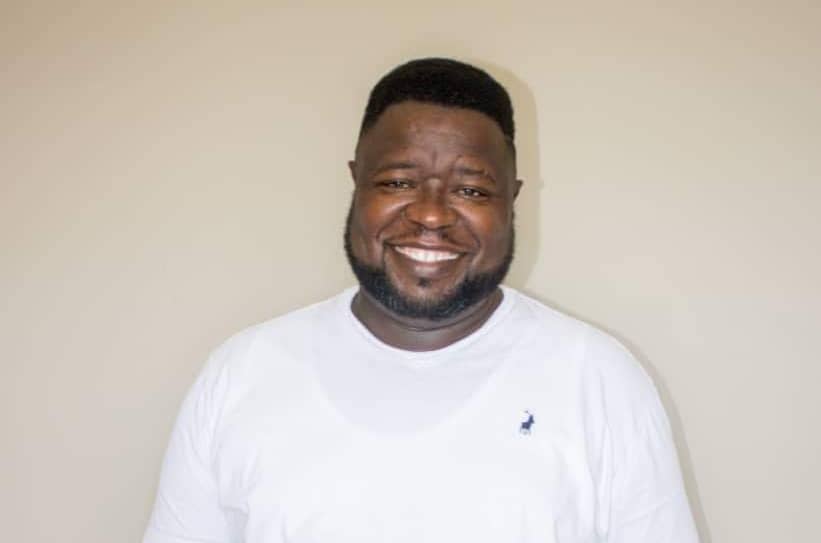 Name: Edward Tokolo Kasete
 Real Estate Specialist - Our Associate in Namibia
We offer an international platform of specialist hospitality property and/or business brokering services by listing and marketing for sale or lease or by investment partner arrangement or management agreement arrangement of a variety of hospitality products (i.e. hotels, resorts, boutique hotels, guest houses, guest lodges, B&Bs, game resorts, wine farms, yachts, cruise liners, etc) through our association with EC Mobility (in Portugal and Spain), BON Hotels (Africa), Giovanni Conti (Italy, North and East Africa, Sri Lanka), Nuno Boquinhas (Portugal, Azores, Madeira, Mozambique), Property 24, Seeff Property Services, Harcourts, Realnet, RE/MAX, Dogon Property Group, Rawson Estates, among many other prominent commercial estate agencies throughout Southern Africa - and now we are entering other African Countries on the East and West Coasts of Africa and moving further abroad! To date, Exquisite Hotel Consultants has a presence in over 80 countries - and counting...
Working with the above-mentioned agencies and others provides the largest possible reach nationally and internationally for all prospective buyers and sellers wishing to enter or exit the Hospitality Industry.
Sister websites have been opened in the following countries: United Kingdom: see www.exquisitehotelconsultants.co.uk, and in Germany: see www.exquisitehotelconsultants.de, and in the United States of America: see www.exquisitehotelconsultants.us.
Please note that several of our hospitality properties and/or businesses for sale or lease or through business partnership arrangements or management contracts are officially "Off-Market" - mainly for privacy reasons. Therefore, they are not listed as part of our hospitality properties/businesses for sale or lease stock. Please contact me for further details.
Should you be considering to sell or buy or lease or obtain a partnership arrangement or management agreement arrangement for your hotel, boutique hotel, resort, guest house, B&B, game lodge, game resort, guest farm, yacht or cruise liner etc, I would be most pleased to provide you with further details of our way of working to effectively market and sell your property(ies) and/or business(es).
 Name: Electrolux Professional
 Food Service, Beverage and Laundry Solutions
Electrolux Professional is a leading global provider of foodservice, beverage and laundry solutions, serving a wide range of customers globally, from restaurants and hotels to healthcare, educational and other service facilities.
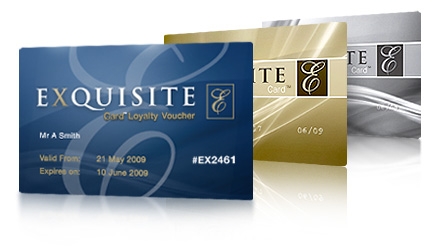
 Name: Exquisite Card
 LAUNCH OF EXQUISITE CARD DISCOUNT LOYALTY PROGRAM FOR ACCOMMODATION & CAR HIRE
As an hotelier of some 40 years standing – 22 years of which as the original owner/operator of Villa Belmonte Manor House Hotel in Cape Town, I am so very pleased and proud to introduce our new venture, namely Exquisite Card™, to you, to meet the needs of Internet-driven travellers who have the power and inclination to plan their holidays or business trips themselves and accordingly reserve flights, accommodation and car hire, etc. directly with service providers.
Exquisite Card offers discounts to this new kind of traveller through a discount card and/or voucher, which entitles the holder to +-20% discount on accommodation - as well as a variety of excellent additional special offers from time to time (including additional discounts on food and beverages) - on more than 5000 four and five star-standard hotels, boutique hotels, guesthouses, lodges and self-catering rooms in twelve African countries, and increasing in numbers and generally, a spread of properties throughout Africa and the rest of the World on a daily basis. The card or voucher is purchased through a secure e-commerce portal at www.exquisitehotelconsultants.com
At a cost of R 390 for a one-year card, R 690 for a two-year card, or R29 for a daily voucher (yes, you can be a member of Exquisite Card™ for just one night if you wish!). This is an insignificant charge compared to the savings made on just one night’s accommodation and other tourism services like car hire and spa treatments etc. Note that we are also currently negotiating with domestic and foreign airlines, restaurants, hired car groups, etc for similar discounts.
How does it work? The cardholder searches the Exquisite Card website for partnering establishments and services, then books directly, stating the card or voucher number. The hotel then charges the client an average of 20% less than the published rate. Nearly two hundred top properties have already become Exquisite Card partners. If you’re wondering, “Where’s the catch?” there quite simply isn’t one. Hotels/Guesthouses want more business, travellers want to pay less and Exquisite Card™ discounts bring the two parties together and make everybody happy! All establishments and partners of Exquisite Card are expected to meet rigorous standards, because our members expect a high level of product and service.
So, please do browse the website and become a member of Exquisite Card™ when next you travel. Should you have any queries whatsoever, please do not hesitate to contact myself at (27) (21) 84 413 1071 or via email at cliff@exquisitehotelconsultants.co.za.
All the best
Cliff Jacobs
Managing Director - Exquisite Card (Pty) Ltd
 Name: Exquisite Hotel Consultants' Hospitality Training Department
 Learn to speak Hotel English (one-to-one online course)
Our TEFL trained tutors teach the following functions
The course consists of 21 lessons (4 to 5 one-hour lessons per month).
 Name: FVE Interiors
 Interior Design
 Name: Healing Earth
 Hotel Amenities - inspired by Africa
 Name: Hospro
 Hospitality Consultancy and Procurement
 Name: Hotel Revenue Management
 Revenue (yield) Management
Online room inventory Distribution & Rates optimisation
Implementation of Best Available Rate (BAR), in conjunction with point 1 & 2
 Name: Indigo Real Estate Agency
 Real Estate Agency - Our Associate in Mozambique
 Name: Lisa Dunn - Tourism Grading Assessor
 Tourism Grading Assessment
 Name: Ooba (Pty) Ltd
 Mortgage Origination
ooba offers you:
 Name: SK Sambu Tours & Transfers
 Johannesburg based Tours & Transfers Operator
We look forward to being of service to you.
Kind regards
King Sambu
 Name: Soul Private Collection
 Hotel Management and Marketing
 Name: The Dumb Butler Hospitality Suppliers
 Hotel Linen Suppliers
LUX Award Winners 2021 for The Best Hospitality Suppliers. We are a proudly South African brand established in 2006.
We Supply:
 Name: The High Street Auction Company
Property Auctioneers
Appreciating Property Value
 Name: Touch Point Retail
 Smart Interior Design
Cliff Jacobs (Nat Dpl Hotel Man (UJ). MPRE. GA Level 5 TEFL) Managing Principal / CEO Exquisite Hotel Consultants (Pty) Ltd Mobile: +27 (0) 84 413 1071 / +27 (0) 61 716 6951 Email: cliff@exquisitehotelconsultants.com Web: https://www.exquisitehotelconsultants.com © All rights reserved Terms and Conditions apply Scroll down to view our Hospitality Properties and Businesses for sale or lease or lease-to-buy or partnership arrangement or management agreement arrangement.